

Waymo Data Engineer Interview Guide: Data Fluency, Process & Questions (2026)


Introduction
Preparing for a Waymo data engineer interview means stepping into one of the most technically demanding data environments in the industry. As autonomous vehicles move from testing to large-scale deployment, Waymo relies on highly reliable data pipelines to process sensor streams, simulation logs, and safety metrics at massive scale. Data engineers here are not just supporting analytics. They are building the infrastructure that directly impacts real world autonomy performance, system safety, and decision making across engineering and research teams.
This guide walks you through what to expect from the Waymo data engineer interview, from the structure of the hiring process to the most common data engineer questions Waymo uses to evaluate data fluency, systems thinking, and execution under ambiguity. You will learn how Waymo tests SQL depth, Python pipeline design, and real world data judgment, along with practical strategies to prepare for each stage to help you stand out and prepare effectively with Interview Query.
Waymo Data Engineer Interview Process
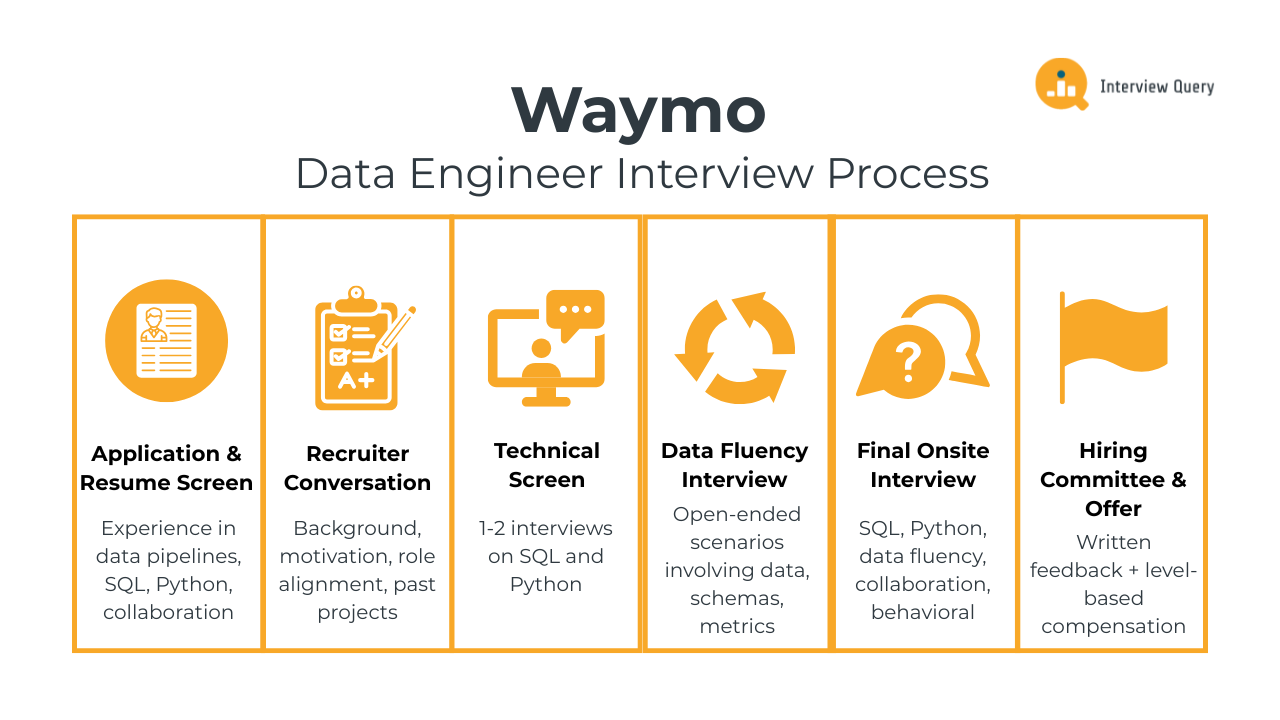
The Waymo data engineer interview process evaluates how well you design reliable data systems, reason about ambiguous real world data, and make sound trade-offs in safety critical environments. The process focuses heavily on data fluency, SQL depth, Python pipeline design, and system reliability rather than abstract algorithm puzzles. Most candidates complete the full interview loop within three to five weeks, depending on team needs and scheduling. Below is a breakdown of each stage and how Waymo interviewers assess your technical judgment and execution at scale.
Read more: Uber Data Engineer Interview Guide
Application and Resume Screen
During the resume review, Waymo recruiters look for candidates who have built and owned data pipelines in production environments. Strong signals include experience with large scale logs or sensor-like data, advanced SQL usage, Python based ETL workflows, and collaboration with machine learning or platform teams. Resumes that clearly show ownership of data quality, monitoring, or performance improvements tend to stand out more than tool heavy but impact light descriptions.
Tip: Highlight moments where you prevented downstream failures through data validation or monitoring, which signals strong ownership of reliability to Waymo interviewers.
Initial Recruiter Conversation
The recruiter conversation is a non-technical discussion focused on your background, motivation for working on autonomous systems, and alignment with the data engineer role at Waymo. You may be asked to walk through past projects, explain how you have worked with complex data, and describe why safety driven infrastructure interests you. Recruiters also confirm logistics such as team preferences, location, and interview timeline.
Tip: Clearly articulate why building correct data systems matters to you, which demonstrates mission alignment with Waymo’s safety first culture.
Technical Screen
The technical screen typically includes one or two interviews centered on SQL and Python. You may be asked to write complex queries, reason about time series data, design data transformations, or debug data quality issues. Interviewers care about how you structure your approach, handle edge cases, and explain assumptions. Clean logic and clear communication matter more than finishing quickly.
Tip: Talking through how you validate intermediate results shows strong analytical discipline and reduces the risk of silent data errors.
Data Fluency Interview
The data fluency interview is a defining part of the Waymo data engineer process. You will be given open ended scenarios involving messy or incomplete data, evolving schemas, or conflicting metrics. The goal is to evaluate how you think about data correctness, monitoring, trade-offs, and downstream impact rather than arriving at a single right answer. Expect to explain how you would investigate issues and make decisions with imperfect information.
Tip: Framing trade-offs in terms of safety impact and system reliability signals mature judgment beyond technical execution.
Final Onsite Interview
The final onsite loop is the most in depth stage of the Waymo data engineer interview process. It typically includes four to five interviews lasting 45 to 60 minutes each. These rounds assess how you design data systems at autonomy scale, reason through ambiguous data problems, and collaborate across engineering and research teams. Interviewers focus on structured thinking, data judgment, and risk awareness in safety critical systems.
SQL and data analysis round: You will analyze large, imperfect datasets similar to vehicle logs or telemetry streams. Tasks may include time series aggregation, anomaly detection, metric validation, or reconciling conflicting data sources. Interviewers evaluate SQL query clarity, edge case handling, and whether your results would be reliable enough to inform safety decisions.
Tip: Calling out assumptions around missing or delayed data demonstrates analytical rigor and real world data awareness.
Python and data pipeline design round: This round evaluates how you design and reason about Python based data pipelines. You may sketch ETL workflows, optimize slow batch jobs, or explain how you handle retries, backfills, and schema evolution. Waymo interviewers prioritize correctness, idempotency, and observability over clever optimizations.
Tip: Explaining validation checks at each pipeline stage shows ownership of data reliability, not just transformations.
Data fluency and systems design round: You will tackle an open ended design problem, such as tracking safety metrics or monitoring model inputs at scale. Interviewers assess how you reason about trade-offs across latency, accuracy, cost, and safety rather than looking for a single correct solution.
Tip: Tying design decisions to downstream autonomy or safety impact signals strong systems level judgment.
Cross functional collaboration round: This interview focuses on how you work with machine learning engineers, autonomy researchers, and product partners. Topics may include translating vague requirements into data contracts, resolving priority conflicts, and communicating data limitations to non technical stakeholders.
Tip: Showing how you proactively align on data quality expectations highlights effective cross functional communication.
Behavioral and ownership round: Interviewers explore how you handle production incidents, ambiguity, and long running initiatives. Expect questions about failures, trade-offs you owned, and improvements you drove beyond the original scope.
Tip: Emphasizing concrete changes you made after setbacks demonstrates accountability and long term ownership.
Hiring Committee and Offer
After the interviews, each interviewer submits independent written feedback. A hiring committee reviews your performance across all rounds, focusing on data fluency, technical judgment, collaboration, and role level fit. If approved, Waymo determines leveling and compensation and may align you with a specific team based on your strengths and interests.
Tip: Communicating clear team preferences and long term interests helps Waymo match you to projects where you can have immediate impact.
Want to build up your data engineer interview skills? Practice real hands-on problems on the Interview Query Dashboard and start getting interview-ready today.
Challenge
Check your skills...
How prepared are you for working as a Data Engineer at Waymo?
What Questions are Asked in a Waymo Data Engineer Interview?
The Waymo data engineer interview questions are designed to evaluate how you work with large scale, real world data that directly supports autonomous driving systems. Interviewers focus on SQL depth, Python pipeline design, data fluency, systems thinking, and behavioral judgment in safety critical environments. Rather than testing trivia, Waymo uses realistic scenarios to understand how you validate data, reason through ambiguity, and communicate trade-offs clearly.
Read more: Data Engineer Interview Questions and Answers
SQL and Data Analytics Interview Questions
This section focuses on your ability to analyze time dependent, high volume datasets similar to vehicle logs, sensor streams, and operational metrics. Waymo uses SQL questions to assess correctness, edge case handling, and how carefully you reason about data quality when metrics influence safety decisions.
Write a query to calculate disengagements per thousand miles driven.
This question tests how well you normalize rare but critical safety events against exposure, which is essential for fair comparisons across vehicles, routes, or time periods at Waymo. Disengagement counts alone are misleading without context, so interviewers want to see that you think in rates, not raw totals. To solve this, you would aggregate total miles driven and total disengagement events over the same time window, join the results on vehicle or fleet, and compute disengagements divided by miles driven multiplied by one thousand.
Tip: Explaining how you handle missing or partial mileage data demonstrates strong metric reliability judgment, which is critical in safety reporting.
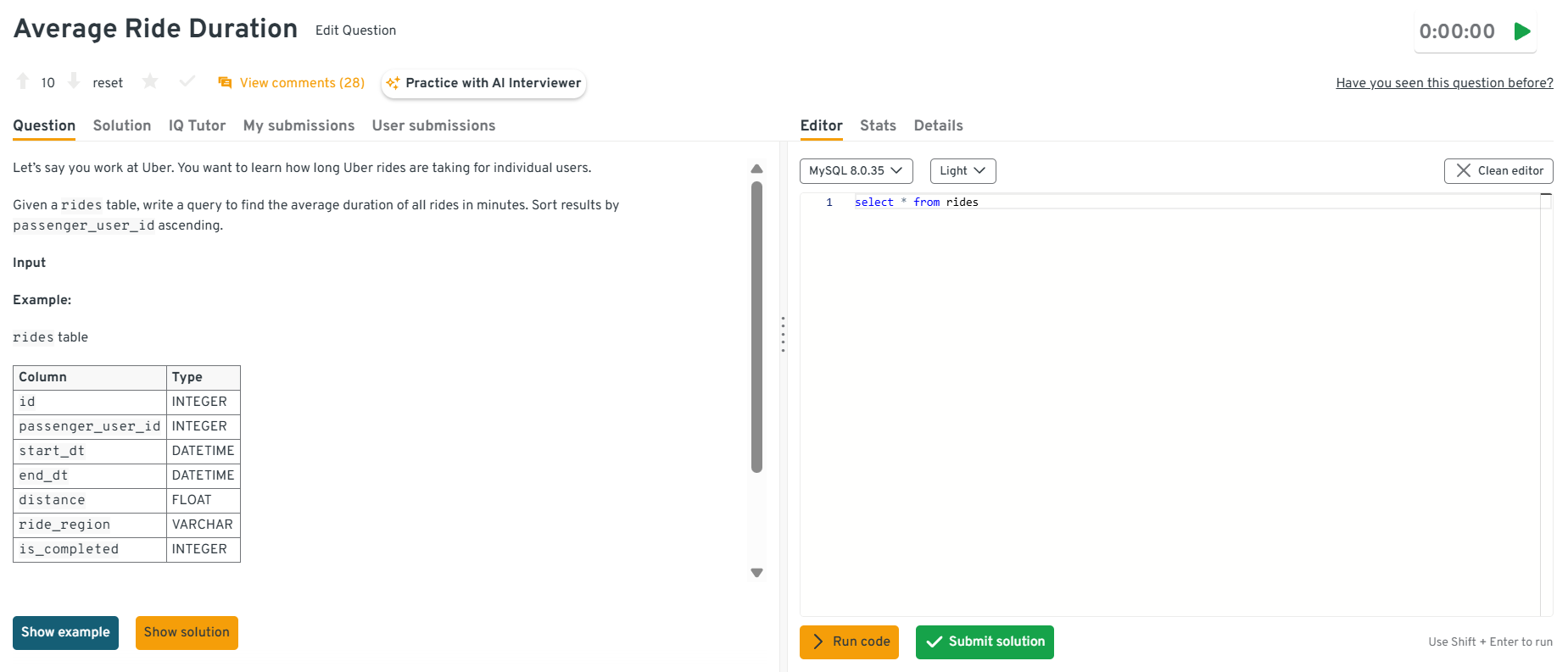
-
This question evaluates your ability to derive meaningful duration metrics from start and end timestamps, a common pattern in Waymo’s trip and simulation data. It tests correct time arithmetic, grouping logic, and awareness of unit conversions. To answer, you would calculate the difference between end and start timestamps, convert the result to minutes, group by user or vehicle identifier, and compute the average duration before ordering by the identifier.
Tip: Calling out how you would handle incomplete or cancelled trips shows practical experience with real world logging imperfections.
Head to the Interview Query dashboard to practice the full set of data engineer interview questions. With built-in code testing, performance analytics, and AI-guided tips, it’s one of the best ways to sharpen your skills for Waymo’s data engineering interviews.
Write a query to find trips with missing data gaps longer than five seconds.
This question tests your ability to detect data continuity issues, which are especially important for autonomous driving analysis. Waymo relies on continuous sensor and telemetry streams, so identifying gaps helps surface ingestion failures or hardware issues. To solve this, you would order events by timestamp within each trip, use a lag function to compute time differences between consecutive records, and filter trips where the gap exceeds five seconds.
Tip: Mentioning clock skew or delayed ingestion signals strong understanding of distributed data systems.
-
This question assesses your ability to reason about consecutive behavior over time, a pattern that maps well to repeated route usage or simulation runs at Waymo. It tests window functions, streak detection logic, and aggregation. To solve it, you would group events by user and URL, identify consecutive days using date differences and lag functions, flag streaks of length seven or more, then compute the percentage of users who meet the condition.
Tip: Explaining how you avoid double counting users across multiple streaks shows careful aggregation thinking.
-
This question evaluates your ability to compute longest consecutive sequences, which is useful for understanding repeated driving sessions or system usage patterns at Waymo. You solve this by ordering events by date per user, using lag to detect breaks, assigning group identifiers to each streak, and aggregating streak lengths before ranking users. This tests window functions, partitioning, and performance aware aggregation.
Tip: Highlighting how you handle multiple events on the same day shows attention to edge cases that often break streak logic.
Write a query to compute a seven day rolling average for a safety metric.
This question tests how you smooth noisy metrics while preserving trends, a critical skill when monitoring safety signals at fleet scale. Waymo uses rolling metrics to reduce volatility without masking real issues. To answer, you would aggregate the metric at a daily level and apply a window function with a seven day frame ordered by date to compute the rolling average.
Tip: Explaining why rolling averages balance responsiveness and stability shows strong metric interpretation skills beyond SQL syntax.
Want to get realistic practice on SQL and data engineering questions? Try Interview Query’s AI Interviewer for tailored feedback that mirrors real interview expectations.
Python and Data Pipeline Interview Questions
These questions assess how you design, reason about, and maintain Python based data pipelines that process autonomy data at scale. Waymo interviewers emphasize correctness, observability, and resilience over clever optimizations.
How would you design a Python pipeline to process raw sensor logs?
This question tests your ability to think end to end about data movement in a safety critical system. Waymo cares about how raw sensor data becomes trustworthy inputs for downstream autonomy teams. A strong answer walks through ingestion, parsing, transformation, validation, and storage while addressing scale, memory constraints, and fault tolerance. Interviewers look for clear stage boundaries and explicit validation before data is consumed.
Tip: Explaining where and why you validate data shows ownership of downstream reliability, not just transformation logic.
-
This question evaluates how you reason about cumulative metrics, a pattern common in fleet level analytics at Waymo. It tests clean Python logic, boundary handling, and correctness when aggregating segment based data. To solve it, you would sum vehicle counts between the specified indices while carefully handling inclusive or exclusive boundaries and validating inputs.
Tip: Clarifying boundary assumptions out loud demonstrates careful reasoning, which is essential for accurate infrastructure metrics.
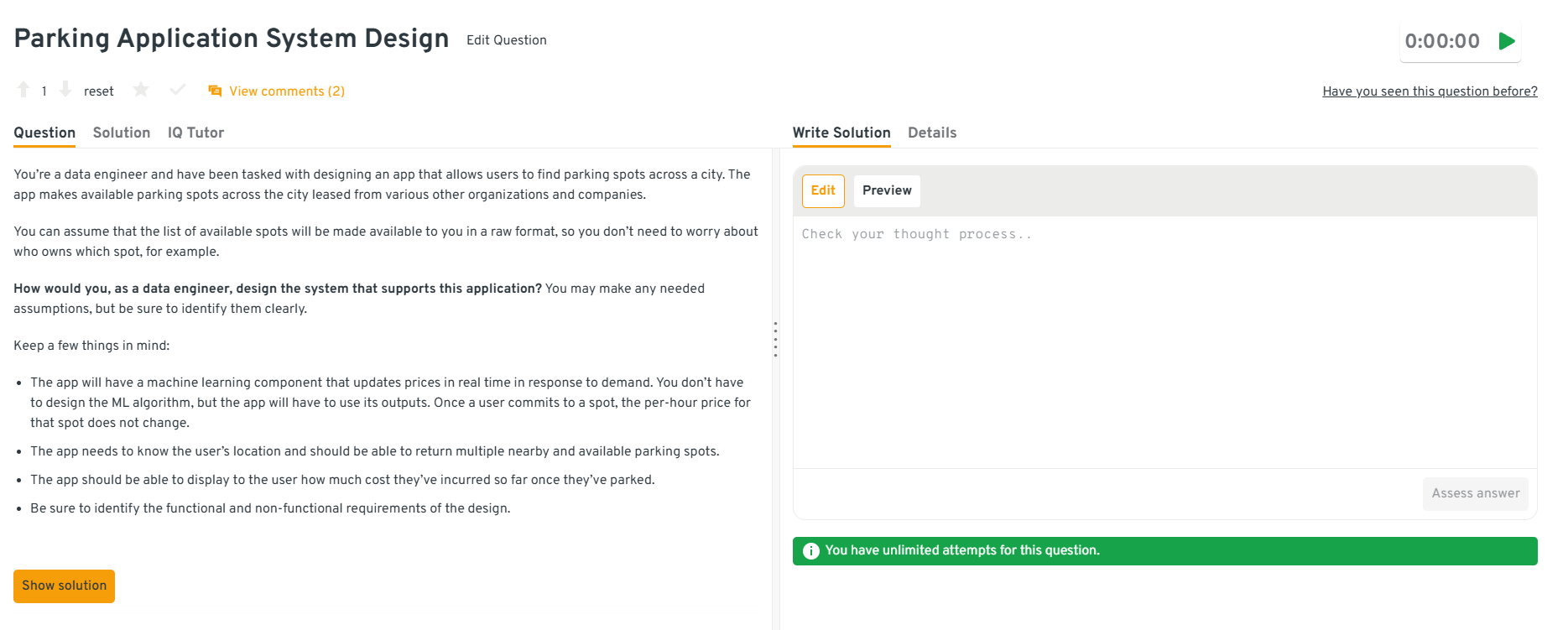
-
This question assesses your ability to design scalable data systems under real world constraints, similar to Waymo’s city scale autonomy operations. Interviewers look for thoughtful choices around ingestion, real time versus batch processing, storage, and monitoring. A strong answer balances freshness, cost, and reliability while explaining how data quality is enforced throughout the system.
Tip: Explicitly discussing trade-offs between latency and correctness signals mature systems design judgment.
Head to the Interview Query dashboard to practice the full set of data engineer interview questions. With built-in code testing, performance analytics, and AI-guided tips, it’s one of the best ways to sharpen your skills for Waymo’s data engineering interviews.
How would you debug a batch job that suddenly slows down?
This question tests your approach to diagnosing performance regressions in production pipelines. Waymo values methodical debugging that minimizes risk to downstream consumers. A strong answer covers profiling, data volume changes, skew detection, dependency bottlenecks, and recent code or data changes before attempting optimizations.
Tip: Prioritizing data skew analysis shows performance awareness grounded in real world pipeline behavior.
How do you validate pipeline outputs before production use?
This question evaluates how you ensure data correctness before it affects autonomy systems. Waymo expects layered validation rather than a single check. You should describe schema validation, range checks, distribution comparisons, and ongoing monitoring once the pipeline is live.
Tip: Distinguishing between correctness checks and sanity checks demonstrates disciplined, production ready testing practices.
How would you backfill historical data after a pipeline fix?
This question tests your ability to plan safe reprocessing at scale. At Waymo, backfills can be expensive and risky if done carelessly. A strong answer explains scoping the backfill window, validating before and after results, controlling resource usage, and communicating downstream impact.
Tip: Calling out incremental or staged backfills signals careful risk management in large scale systems.
Watch next: Top 10+ Data Engineer Interview Questions and Answers
For more in-depth practice, check out a collection of 100+ data engineer interview questions with detailed answers. In this walkthrough, Interview Query founder Jay Feng breaks down over 10 core data engineering questions, covering SQL, distributed systems, pipeline design, and data modeling.
Data Fluency and Systems Design Interview Questions
These questions focus on how you reason about data systems holistically, especially when requirements are ambiguous and trade-offs affect safety, cost, and latency. Waymo uses these questions to understand how you design systems that remain trustworthy and scalable in real world autonomy environments.
How would you design a system to track fleet level safety metrics?
This question tests your ability to design an end to end metrics system that leadership and autonomy teams can trust. At Waymo, safety metrics inform operational and engineering decisions, so interviewers want to see clear thinking around data sources, aggregation layers, validation, and monitoring. A strong answer explains how raw vehicle logs flow through validated pipelines into aggregated metrics, with safeguards to detect regressions or data loss.
Tip: Connecting metrics directly to decision making signals strong systems thinking with product awareness.
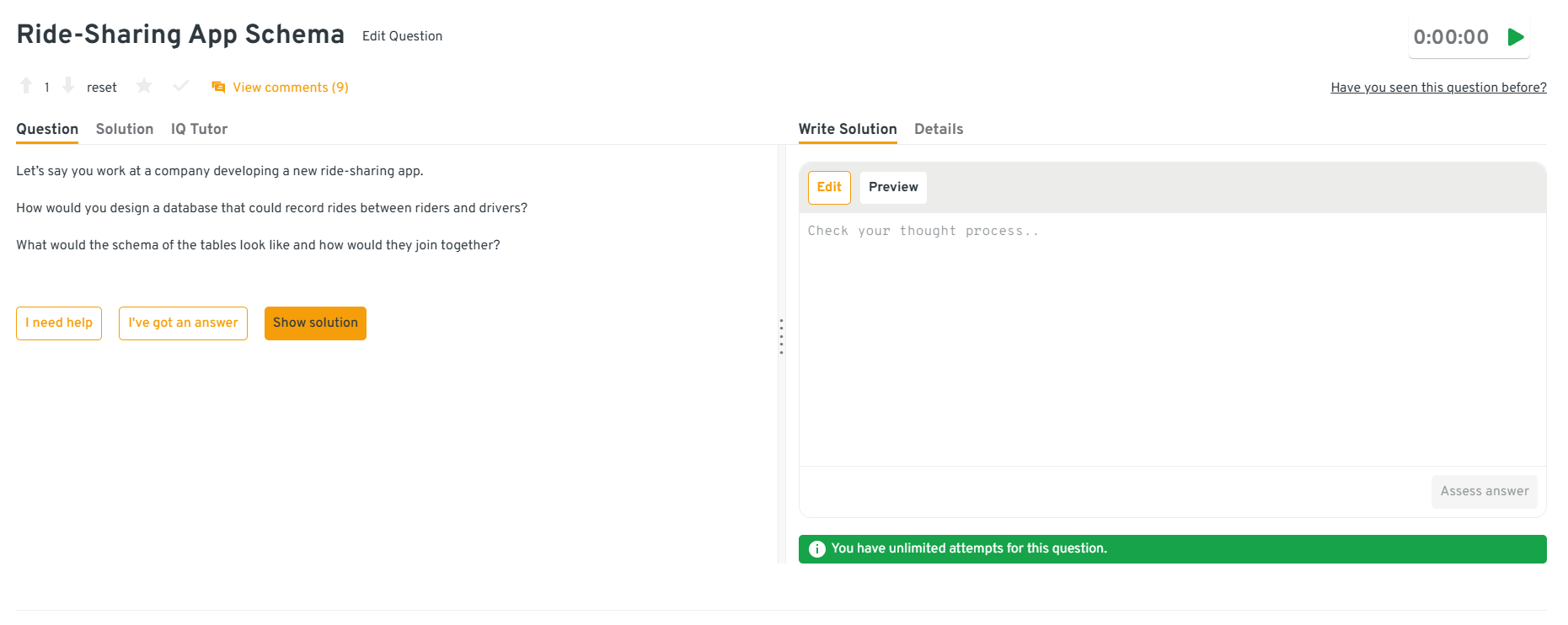
-
This question evaluates how you model relationships and data access patterns, which is critical for Waymo’s trip, routing, and simulation data. Interviewers look for normalized schemas, clear primary and foreign keys, and thoughtful handling of one to many relationships. A good answer explains how schema design supports both transactional integrity and analytical queries.
Tip: Explaining how the schema supports future analytics shows foresight beyond immediate requirements.
Head to the Interview Query dashboard to practice the full set of data engineer interview questions. With built-in code testing, performance analytics, and AI-guided tips, it’s one of the best ways to sharpen your skills for Waymo’s data engineering interviews.
How would you choose between real time and batch pipelines?
This question tests your ability to make trade-offs when designing data systems under constraints. At Waymo, some signals require immediate action while others tolerate delay. A strong answer compares latency needs, reliability, cost, and failure modes, and ties the choice back to how the data will be used.
Tip: Anchoring pipeline decisions in downstream impact demonstrates practical engineering judgment.
-
This question assesses your ability to operate safely at scale. Waymo interviewers want to see careful planning, staged rollouts, and risk mitigation. A solid answer covers schema changes, backfill strategies, monitoring, and rollback plans while minimizing load on production systems.
Tip: Emphasizing incremental rollout and validation signals strong operational discipline.
-
This question evaluates your ability to design a complete data stack, similar to internal analytics platforms at Waymo. Interviewers look for coherent architecture choices, clear data flow, and reliability considerations. A strong answer explains ingestion, orchestration, transformation, storage, and visualization, along with monitoring and failure handling.
Tip: Clearly articulating why each tool is used shows systems level clarity rather than tool memorization.
Looking for hands-on problem-solving? Test your skills with real-world challenges from top companies. Ideal for sharpening your thinking before interviews and showcasing your problem solving ability.
Behavioral Interview Questions for Waymo Data Engineers
Behavioral questions evaluate ownership, collaboration, and how you operate in high stakes environments where data issues can have real world consequences. Waymo uses these questions to understand how you make decisions under pressure, communicate across teams, and take responsibility for safety critical outcomes.
Tell me about a time you caught a critical data issue late.
This question assesses accountability, judgment under pressure, and how you respond when risks surface close to delivery. At Waymo, late breaking data issues can affect safety analysis or model evaluations, so interviewers want to see how you prioritize impact and resolution over blame.
Sample answer: I once discovered a data aggregation bug shortly before a scheduled release that would have skewed key metrics. I immediately flagged the issue, explained the potential impact, and proposed delaying the release while I implemented a fix and reran validations. After resolving it, I added monitoring to catch similar issues earlier.
Tip: Emphasizing preventive changes shows long term ownership and reliability mindset.
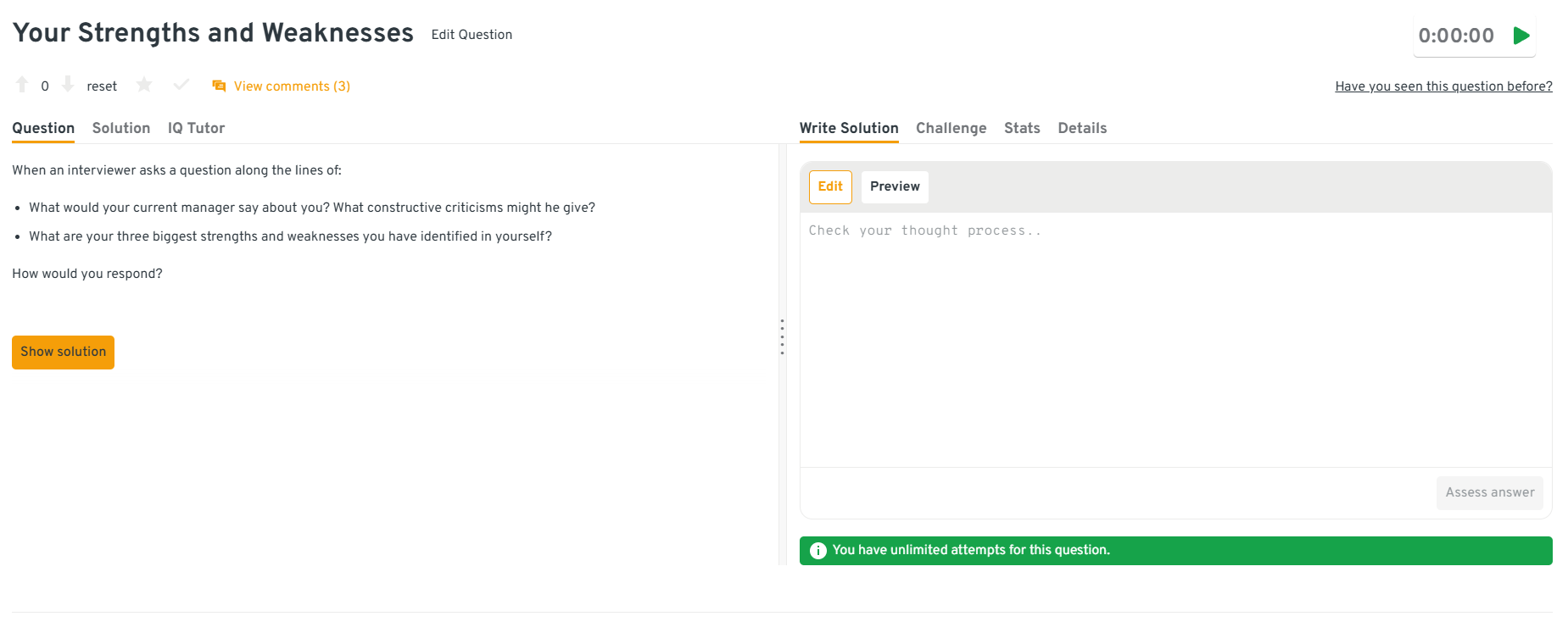
What are your three biggest strengths and weaknesses you have identified in yourself?
This question evaluates self awareness and growth mindset. Waymo looks for engineers who understand both their strengths and where they need to improve, especially in complex, evolving systems. Interviewers want honest reflection paired with concrete improvement actions.
Sample answer: My strengths include structured problem solving, strong data validation habits, and calm decision making under pressure. A weakness I identified was spending too much time perfecting edge cases early. I addressed this by time boxing investigations and aligning earlier with stakeholders on acceptable risk.
Tip: Showing how you actively manage weaknesses signals maturity and coachability.
Head to the Interview Query dashboard to practice the full set of data engineer interview questions. With built-in code testing, performance analytics, and AI-guided tips, it’s one of the best ways to sharpen your skills for Waymo’s data engineering interviews.
What makes you a good fit for our company?
This question assesses motivation and alignment with Waymo’s mission. Interviewers want to understand whether you are genuinely interested in autonomy and safety driven engineering rather than just the role title. Strong answers connect personal values to Waymo’s impact.
Sample answer: I am drawn to Waymo because it operates at the intersection of data, systems reliability, and real world safety. My background in building high reliability data pipelines aligns well with Waymo’s need for trustworthy metrics and infrastructure that autonomy teams can rely on.
Tip: Tying your experience to Waymo’s safety mission demonstrates authentic alignment.
How do you handle ambiguity in high stakes systems?
This question evaluates how you frame decisions when information is incomplete and consequences matter. Waymo expects engineers to move forward responsibly without waiting for perfect data. Interviewers look for structured reasoning and risk awareness.
Sample answer: When faced with ambiguity, I start by clarifying what decisions depend on the data and what risks are acceptable. I identify assumptions explicitly, validate what I can quickly, and communicate uncertainty clearly before recommending a path forward. I also plan follow ups to reduce uncertainty over time.
Tip: Demonstrating structured reasoning under uncertainty signals senior level judgment and trustworthiness.
Want to master the full data engineering lifecycle? Explore our Data Engineering 50 learning path to practice a curated set of data engineering questions designed to strengthen your modeling, coding, and system design skills.
What Does a Waymo Data Engineer Do?
A Waymo data engineer builds and maintains the data infrastructure that powers autonomous driving systems at scale. The role centers on transforming raw sensor, simulation, and vehicle telemetry data into reliable, queryable datasets that support safety analysis, model training, and operational decision making. Data engineers at Waymo work closely with autonomy, simulation, and machine learning teams, where data correctness, latency, and reliability directly influence real world vehicle behavior.
Common responsibilities include:
- Designing and maintaining large scale data pipelines that process lidar, radar, camera, and vehicle log data across batch and streaming systems.
- Building data models and analytics layers that enable accurate measurement of safety metrics, disengagements, and system performance.
- Partnering with machine learning engineers to deliver clean, well structured datasets for training, evaluation, and offline analysis.
- Implementing data validation, monitoring, and alerting systems to detect data quality issues before they affect downstream autonomy systems.
- Optimizing storage, partitioning, and compute strategies to support petabyte scale datasets with predictable performance and cost control.
Tip: Emphasizing data reliability and validation shows Waymo interviewers that you understand how infrastructure decisions directly impact safety critical systems.
How to Prepare for a Waymo Data Engineer Interview
Preparing for a Waymo data engineer interview goes beyond practicing queries or reviewing pipeline patterns. You are preparing for a role where data decisions directly affect autonomy performance and safety outcomes. Waymo looks for engineers who can reason carefully under uncertainty, anticipate failure modes, and communicate trade-offs clearly across engineering and research teams.
Read more: How to Prepare for a Data Engineer Interview
Below is a focused, step by step approach to help you prepare effectively without duplicating what the interview already tests.
Build intuition for safety critical decision making: Waymo data engineers constantly make choices where imperfect data still requires action. Practice reasoning through scenarios where data is incomplete, delayed, or contradictory, and decide what you would ship, block, or investigate further. Focus on how you assess risk rather than chasing perfect certainty.
Tip: Explaining how you decide when data is “good enough” demonstrates judgment under ambiguity, a key senior signal at Waymo.
Practice reasoning about failure before success: Waymo interviewers expect you to think proactively about what can go wrong in data systems. When reviewing past projects, identify failure modes you anticipated or missed, such as silent data loss, metric drift, or partial outages. Be ready to explain how you would detect and mitigate them earlier next time.
Tip: Proactively discussing failure modes shows systems thinking and reliability ownership.
Refine how you explain trade-offs out loud: Many Waymo interviews are conversational and open ended. Practice narrating your thinking clearly while designing systems or investigating issues. Focus on explaining why you chose one approach over another, not just what you built.
Tip: Clear verbal reasoning signals strong collaboration skills in cross functional autonomy teams.
Prepare examples that show long term ownership: Waymo values engineers who improve systems beyond the initial ask. Review your experience for moments where you added monitoring, improved data contracts, reduced future risk, or simplified operations. These examples matter more than short term wins.
Tip: Highlighting preventive improvements demonstrates ownership beyond task completion.
Align your stories with autonomy context: Even if you have not worked in self driving, map your experience to analogous domains such as distributed systems, real time data, or high reliability platforms. Be explicit about how your work would translate to autonomy scale problems.
Tip: Drawing clear parallels shows learning agility and domain adaptability.
Run focused mock interviews on reasoning, not speed: Simulate interviews where the goal is to explain assumptions, constraints, and next steps rather than finishing quickly. After each mock, review where your reasoning lacked structure or where you skipped validation steps.
Tip: Iterating on reasoning clarity improves performance in Waymo’s data fluency interviews.
Preparing this way helps you show up as a thoughtful, safety minded data engineer who can be trusted with autonomy critical systems, which is exactly what Waymo is hiring for.
Struggling with take-home assignments? Get structured practice with Interview Query’s Take-Home Test Prep and learn how to ace real case studies.
Salary and Compensation for Waymo Data Engineers
Waymo’s compensation framework is designed to attract data engineers who can build highly reliable, large scale data systems that support fully autonomous driving. Data engineers typically receive competitive base pay, annual performance bonuses, and meaningful equity grants, with stock forming an important component of long term compensation. Your total package depends on level, location, scope of responsibility, and the team you join. Most candidates interviewing for Waymo data engineering roles are evaluated at mid level or senior bands, particularly if they have experience owning production pipelines, distributed systems, or safety critical data infrastructure.
Read more: Data Engineer Salary
Tip: Confirm your target level with your recruiter early, since Waymo’s leveling strongly influences both compensation range and role expectations.
Waymo Data Engineer Compensation Overview (2025-2026)
| Level | Role Title | Total Compensation (USD) | Base Salary | Bonus | Equity (RSUs) | Signing / Relocation |
|---|---|---|---|---|---|---|
| L3 | Data Engineer (Early Career) | $150K – $190K | $125K–$145K | Performance based | Standard RSUs | Limited, role dependent |
| L4 | Data Engineer II / Mid Level | $185K – $240K | $145K–$170K | Performance based | RSUs included | Offered selectively |
| L5 | Senior Data Engineer | $220K – $300K | $165K–$190K | Above target possible | Larger RSU grants | Common for senior hires |
| L6 | Staff Data Engineer | $280K – $360K+ | $185K–$210K | High performer bonuses | High RSUs + refreshers | Frequently offered |
Note: These estimates are aggregated from 2025 data on Levels.fyi, Glassdoor, public job postings, and Interview Query’s internal salary database.
Tip: Equity refreshers become more meaningful after the first year, so evaluate total compensation over a multi year horizon rather than focusing only on year one pay.
Negotiation Tips that Work for Waymo
Negotiating compensation at Waymo is most effective when discussions are grounded in level clarity, market benchmarks, and scope of impact. Recruiters value candidates who approach negotiation thoughtfully and with clear justification.
- Confirm your level before negotiating numbers: Waymo’s leveling bands (L3 through L6) determine base salary, equity ranges, and performance expectations. A level change can shift total compensation by tens of thousands.
- Anchor with relevant market benchmarks: Use sources such as Levels.fyi, Glassdoor, and Interview Query salaries to support your expectations. Frame your value in terms of pipeline reliability, data correctness, scale, and risk reduction rather than tools alone.
- Account for location based variation: Compensation differs across Bay Area, Los Angeles, Phoenix, and remote roles. Always ask for location specific ranges to evaluate the offer accurately.
Tip: Ask for a full compensation breakdown including base salary, bonus target, equity vesting schedule, and any signing or relocation incentives so you can compare offers confidently and negotiate from an informed position.
FAQs
How long does the Waymo data engineer interview process take?
Most candidates complete the Waymo data engineer interview process within three to five weeks, depending on interview availability and team matching. Timelines can extend if multiple teams are evaluating your profile or if additional data fluency interviews are added. Recruiters usually share an updated timeline after each major stage so expectations stay clear.
Does Waymo use online coding assessments or platforms like HackerRank?
Waymo does not consistently rely on standardized online assessments. Many candidates move directly into live SQL, Python, or data fluency interviews conducted through shared documents or collaborative tools. Some early career roles may include a short take home or screening exercise, but most evaluation happens in live, discussion based interviews.
How important is autonomous driving or robotics experience for Waymo?
Prior experience in autonomous driving or robotics is not required. Waymo looks for strong data engineering fundamentals, systems thinking, and experience working with complex or large scale data. Candidates from infrastructure, platform, or high reliability domains often perform well if they can clearly translate their experience to autonomy scale problems.
What is the difficulty level of Waymo’s SQL and data questions?
Waymo’s SQL and data questions are moderately to highly challenging, with an emphasis on real world scenarios rather than trick syntax. Questions often involve time series data, data gaps, anomaly detection, and metric validation. Interviewers care more about correctness, assumptions, and reasoning than writing the shortest possible query.
What does Waymo look for most in data engineer candidates?
Waymo prioritizes data judgment, ownership, and the ability to reason through ambiguity. Strong candidates demonstrate how they validate data, anticipate failures, and make trade-offs when perfect information is unavailable. Clear communication and a safety first mindset consistently stand out across interview rounds.
Do Waymo data engineers work closely with machine learning teams?
Yes. Waymo data engineers partner closely with machine learning and autonomy teams to ensure training, evaluation, and monitoring data is accurate and reliable. This collaboration often involves defining data contracts, validating model inputs, and debugging issues that surface during model training or deployment. Interviewers expect candidates to be comfortable operating in highly cross functional environments.
How does Waymo evaluate seniority and leveling for data engineers?
Waymo evaluates seniority based on scope of ownership, technical judgment, and ability to operate independently in ambiguous, high impact situations. Senior candidates are expected to anticipate failure modes, influence data design decisions, and improve system reliability beyond assigned tasks. Leveling is determined holistically across interview feedback rather than performance in a single round.
Become a Waymo Data Engineer with Interview Query
Preparing for the Waymo data engineer interview means developing strong data judgment, systems level thinking, and the ability to operate confidently in safety critical environments. By understanding Waymo’s interview structure, practicing real world SQL and pipeline scenarios, and refining how you reason through ambiguity, you can approach each stage with clarity and confidence. For targeted preparation, explore the full Interview Query’s question bank, practice with the AI Interviewer, or work one on one with an expert through Interview Query’s Coaching Program to refine your approach and position yourself to stand out in Waymo’s data engineering hiring process.
Waymo Interview Questions
| Question | Topic | Difficulty |
|---|---|---|
Data Structures & Algorithms | Medium | |
You are given a binary tree of unique positive numbers. Each node in the binary tree is represented as a dictionary with the following keys:
Given two node values as input ( Note: If one of the nodes doesn’t exist in the tree, return Example: Input: Output: Explanation:
| ||
Data Structures & Algorithms | Medium | |
Data Structures & Algorithms | Medium | |
SQL | Easy | |
Machine Learning | Medium | |
Statistics | Medium | |
SQL | Hard | |
Machine Learning | Medium | |
Python | Easy | |
Deep Learning | Hard | |
SQL | Medium | |
Statistics | Easy | |
Machine Learning | Hard |
Discussion & Interview Experiences