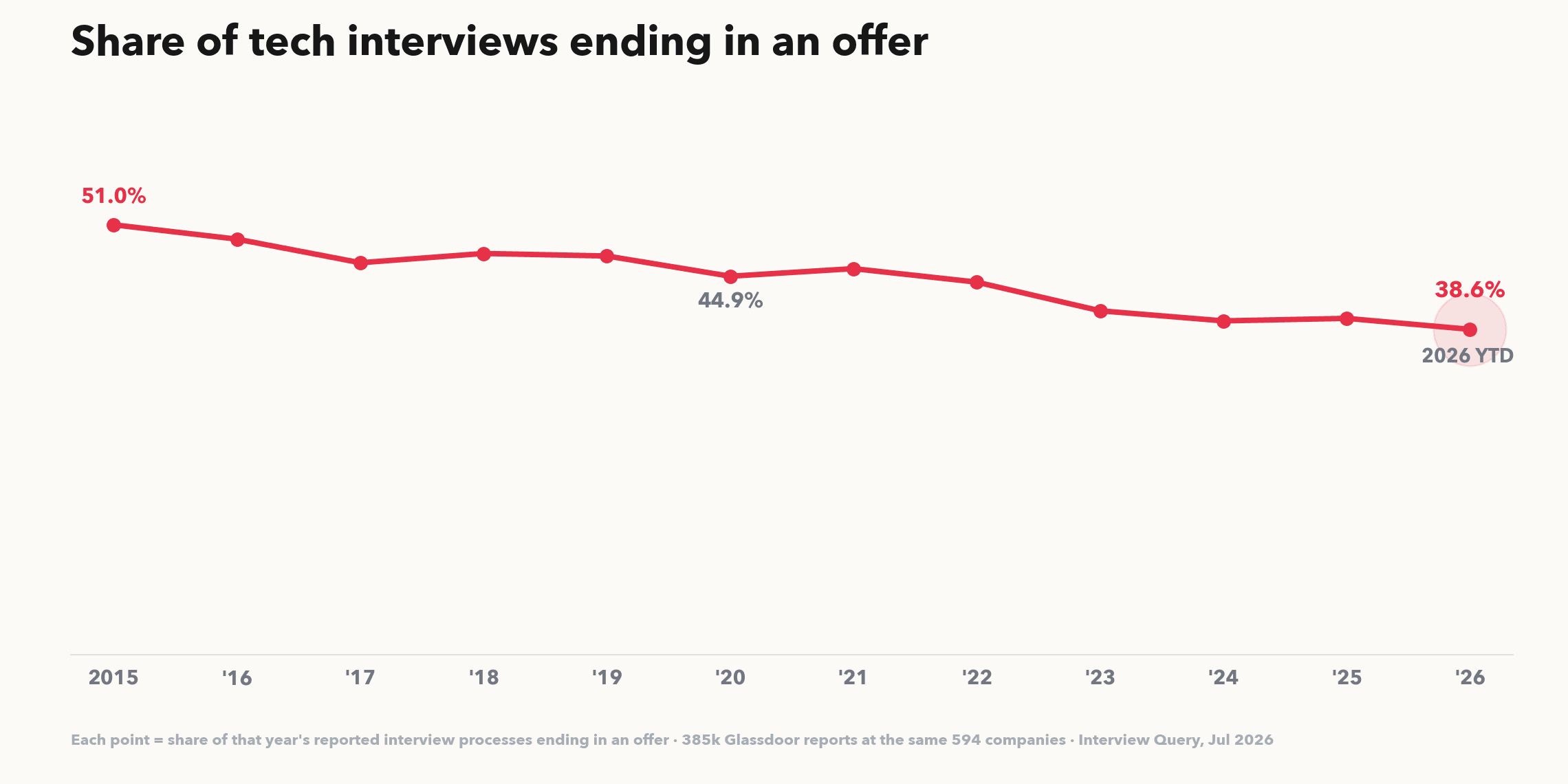
Your Odds of Getting the Offer Have Never Been Lower
Offer rates for tech jobs are at their lowest point in over a decade. We analyzed 1.2M interview experiences to find where the decline is concentrated.
Published July 28, 2026

Offer rates for tech jobs are at their lowest point in over a decade. We analyzed 1.2M interview experiences to find where the decline is concentrated.
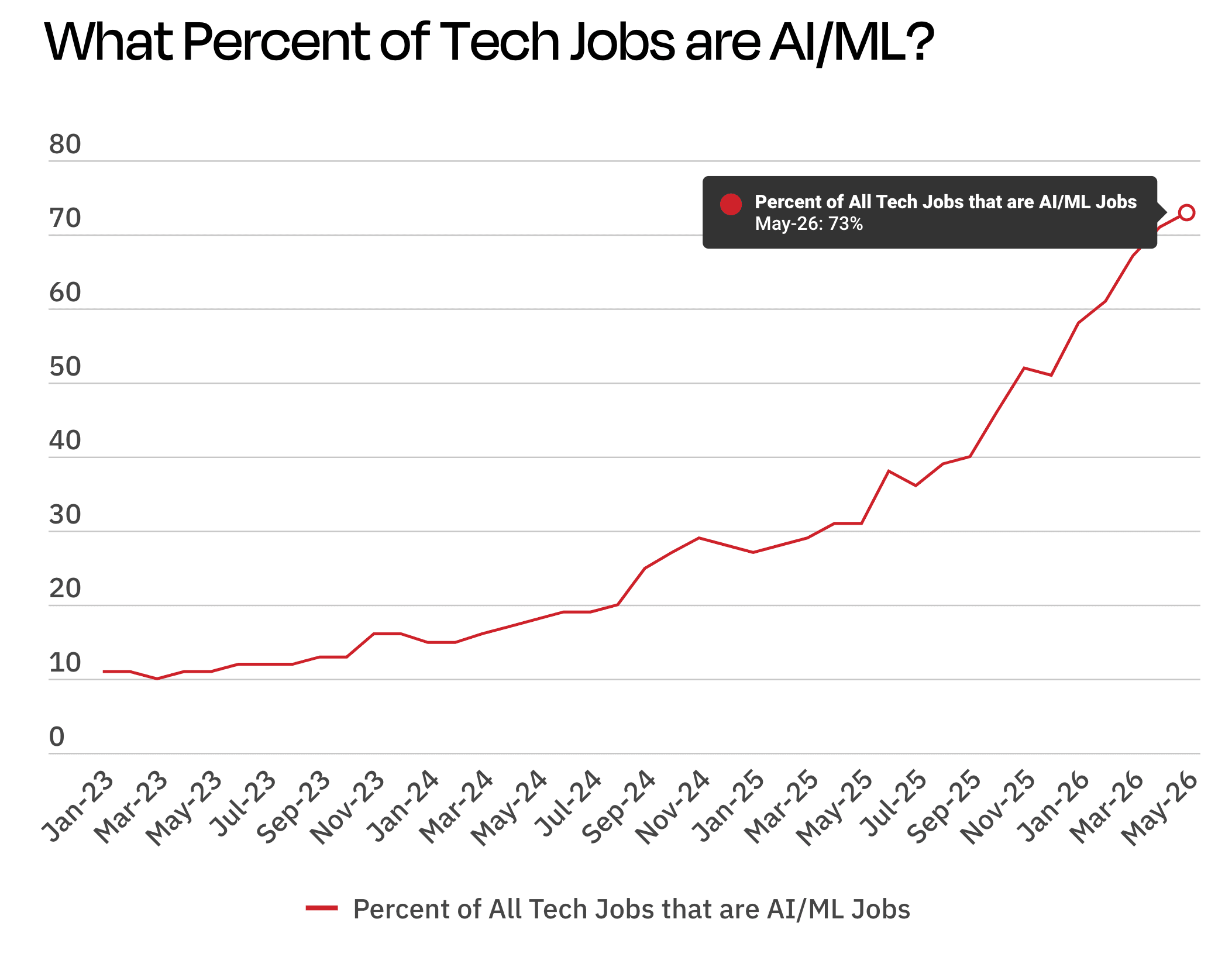
Despite rapid growth in AI-related hiring requirements, employers continue to use interviews to evaluate core analytical, technical, and communication skills.

Despite a surge in tech job postings, employers remain cautious, leading to longer interview processes and higher standards for software, data, and analytics candidates.

As AI becomes standard in hiring workflows, employers are increasingly using interviews to evaluate communication, judgment, and leadership rather than technical ability alone.

Data interviews are evolving from generic technical screens into domain-specific job simulations that test business judgment as much as analytical skill.
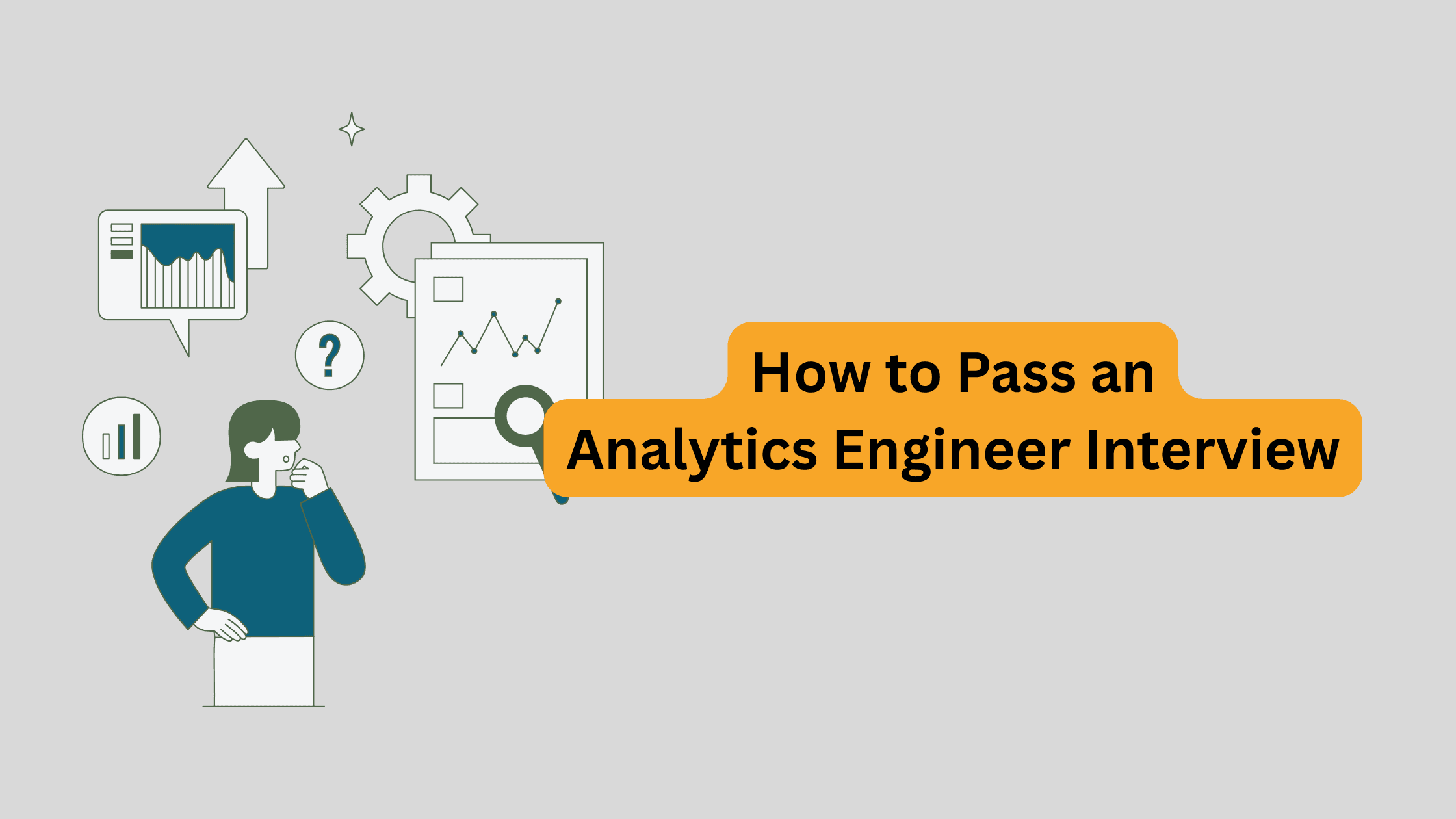
A practical guide to analytics engineer interviews covering SQL, data modeling, and stakeholder communication with real-world preparation strategies.

Data interview loops are expanding across more formats, forcing candidates to demonstrate technical, analytical, and communication skills over longer processes.
This guide helps you choose and build fintech ML projects that align with your skill level and demonstrate real financial problem-solving ability.
Business intelligence interviews test your ability to combine SQL, metrics, and communication into clear, actionable recommendations.

AI interviews are scaling quickly, but unclear communication and lack of human visibility are reshaping how candidates experience hiring.
Excel assessments test how quickly you can structure messy data, calculate the right metrics, and communicate clear business insights under pressure.

AI is raising the floor for candidates, but forcing companies to redesign interviews to better test real judgment and decision-making.