

Worker Productivity Is Up 4.9%, But Hiring Remains Frozen Heading Into 2026


A Frozen Job Market to Start 2026
To many workers, the job market feels stuck in a strange contradiction. Companies keep reporting higher productivity, and if you regularly browse job boards, they are still full of open roles. Yet getting hired feels harder than it should. Interviews drag on, roles get reposted, and offers seem scarce.
The data backs up that unease. Recent U.S. figures show worker productivity rising sharply, while hiring growth remains slow. Employers are clearly producing more, but they’re not adding people at the same pace. This crisis echoes what recruiters themselves report: even with more applicants, they still struggle to find “qualified” candidates, as outlined in a recent LinkedIn research on the hiring gap.
Even though it may feel like outright collapse for many candidates, the 2026 hiring is actually cautious and constrained, shaped by productivity gains and broader economic uncertainty.
Productivity Is Rising; Hiring Incentives Are Changing
Source: United States Bureau of Labor Statistics
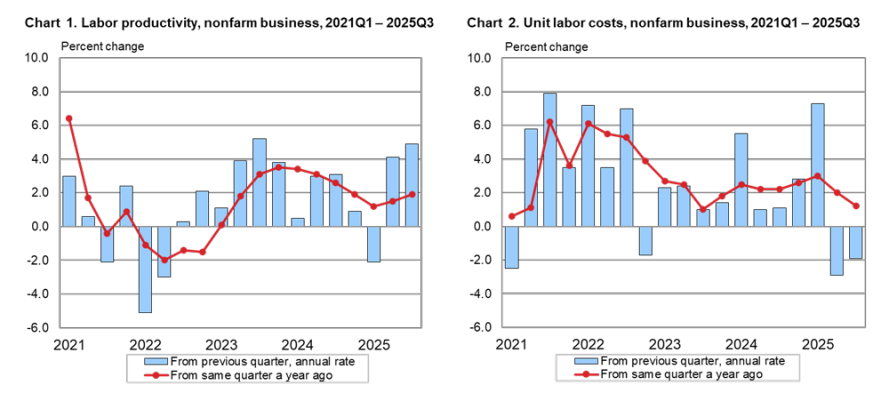
According to an analysis of recent labor data, U.S. worker productivity rose 4.9%, a striking jump by historical standards. On paper, that’s good news: more output per worker usually signals a healthy economy. In practice, it changes hiring incentives in ways that job seekers immediately feel.
Productivity gains mean companies can hit revenue or delivery targets with fewer people. And as automation, better tooling, and process improvements have accelerated in the past few years, teams can now do more without expanding headcount. From an executive or investor perspective, that’s a win; there’s no need for aggressive, costly hiring if existing teams are already delivering.
The result is fewer net-new roles and higher expectations for each position that does open. For job seekers, this shows up as narrower job descriptions and roles that demand immediate impact. So while productivity largely due to digital transformation hasn’t eliminated jobs, it has reduced the urgency to create new ones.
Plenty of Job Posts, Very Few Real Hires
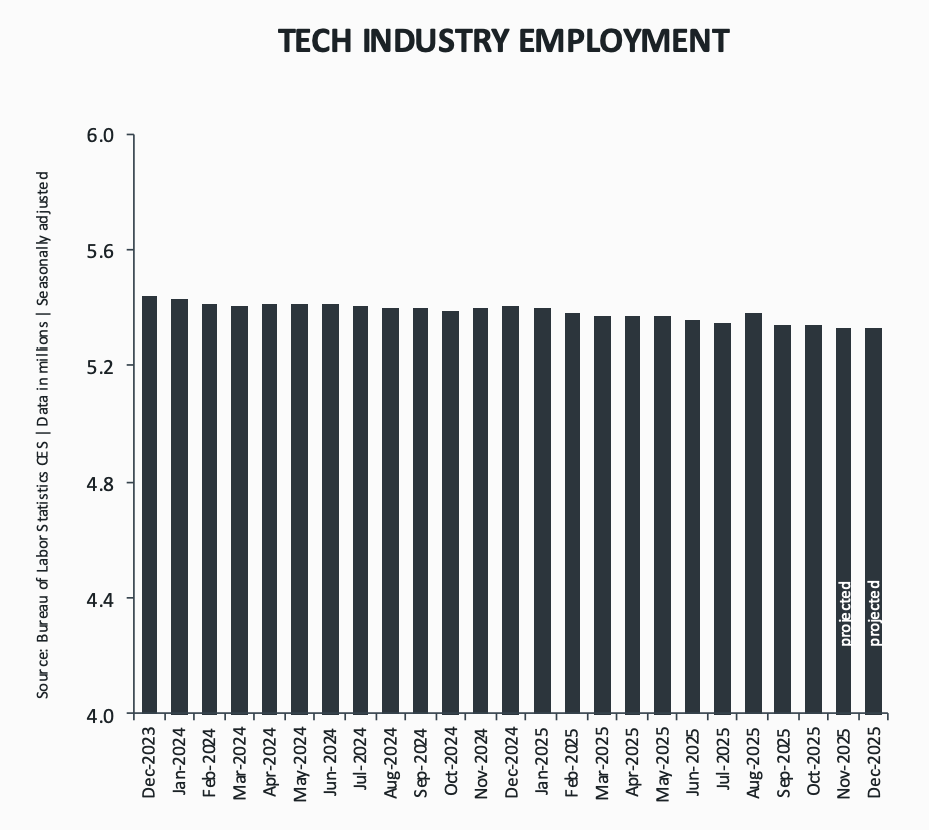
Nowhere is this more evident and confusing than in tech. CompTIA data shows nearly 450,000 tech job postings nationwide, but actual hiring remains flat or sluggish.
 Source: CompTIA Tech Jobs Report
One reason is that job postings don’t always mean active hiring. Many companies keep evergreen listings open to collect resumes, test the market, or maintain a talent pipeline “just in case.” Others post roles with approval to interview, but not necessarily to hire quickly. More and more candidates are also noticing that some postings may be outright fraudulent with the intent to steal workers’ data.
For candidates, this creates a demoralizing loop, as interviews stall and hiring cycles stretch for months with no proper feedback and closure. In other words, the market looks busy but hiring outcomes remain frozen. CompTIA’s latest jobs report thus notes that ‘[s]tuck is a fitting characterization’ of today’s tech labor market, with artificial intelligence having a direct and indirect effect on hiring data.
Why Employers Are Hiring Slower Across Tech and Beyond
This slowdown isn’t limited to software or IT. White-collar roles across industries are affected by economic uncertainty, high interest rates, and ongoing budget scrutiny. Leaders are thus hesitant to commit to long-term payroll costs, and even profitable companies are under pressure to control expenses and protect margins.
Productivity gains amplify that caution. If teams are already meeting goals, leadership can delay hiring, prioritize backfills over net-new roles, or split responsibilities across existing staff. For tech in particular, AI further complicates the situation, as it’s used not only to increase productivity but to also justify workforce decisions like hiring freezes and layoffs.
Both job reports across tech and beyond point to the same conclusion. Employers aren’t convinced demand is strong or stable enough to justify broad hiring. So they wait, prioritizing AI skills and raising the bar when they do move.
How Workers Can Navigate A ‘Stuck’ Job Market
For tech workers and other white-collar professionals, this context matters. A stagnant job search isn’t proof you’re unqualified, and is instead a reflection of a market where roles are scarcer and selectivity is extreme. Competition is higher because companies are opening fewer seats, not because everyone else suddenly became better.
It’s also worth noting that employers increasingly value immediate impact over long-term potential. “Hiring freeze” often doesn’t mean no hiring at all; it means hiring only when a candidate feels like a near-perfect fit. That dynamic erodes confidence, especially as rejection or silence becomes the norm.
As today’s candidates experience a structural slowdown backed by recent market and hiring data, it’s normal to feel stuck. But there must still be an effort to adapt to this new reality, mainly by continuing to focus on alignment and impact even when it’s easier to mass apply to job postings.
This recalibration of expectations must happen on the other end of the hiring process, too; employers must rethink how they can continue investing in people while still keeping productivity high and costs low.