

Dice Says Tech Hiring Is Rising in Insurance and Banking. So Are Interview Standards.

Tech Hiring Growth Meets Higher Interview Expectations
Insurance and banking tech hiring in 2026 just got a clearer signal. In Dice’s April 2026 Jobs Report, tech job postings rose 9% month over month in March and 15% year over year, suggesting market stability.
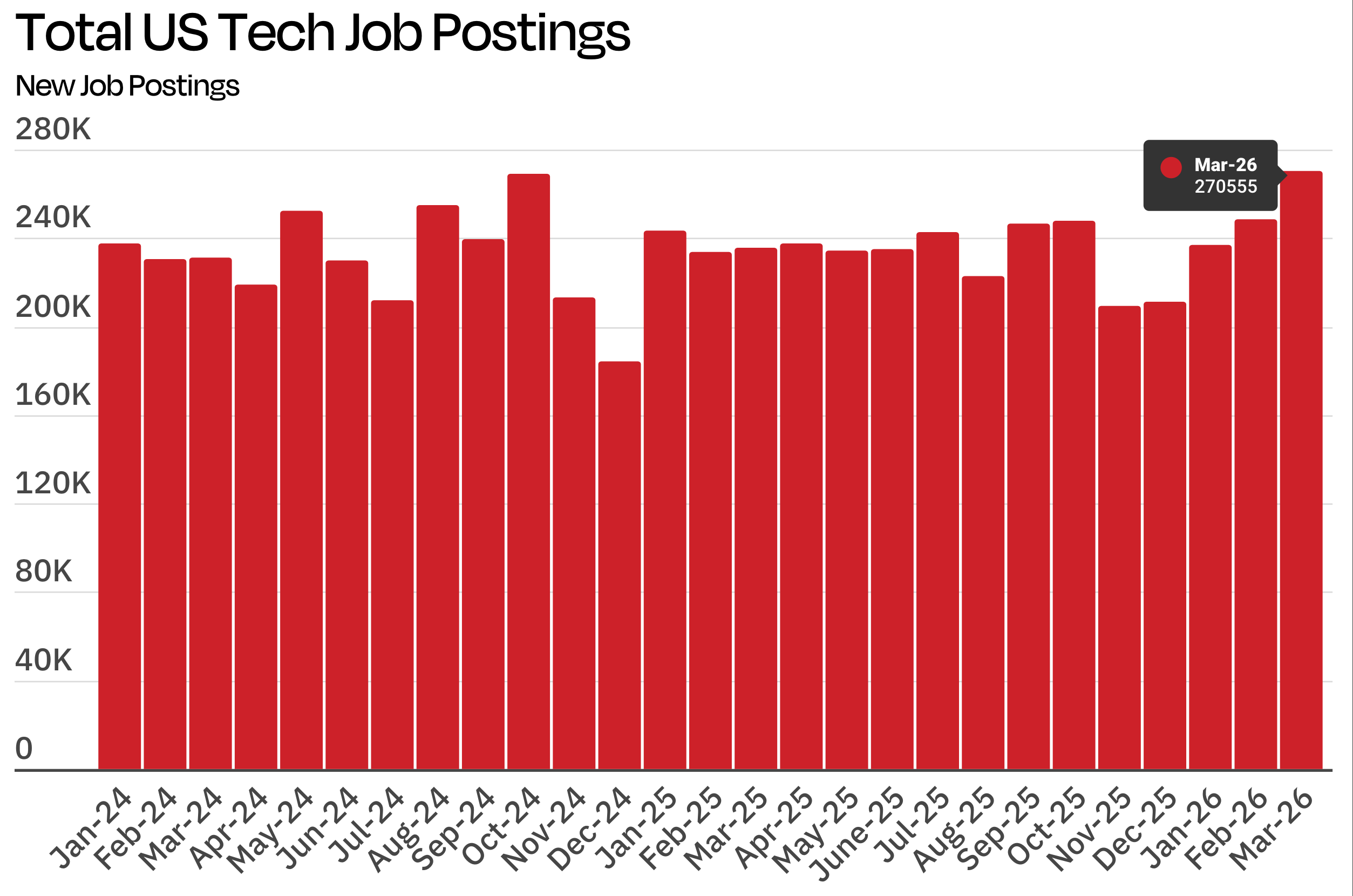
Source: Dice April 2026 Jobs Report
Insurance led all industries with 108% month over month growth and 175% year over year growth, while finance and banking posted 66% year over year growth. Dice also found that 67% of U.S. tech job postings now ask for AI skills, up from 61% in February.
While that sounds like good news for candidates, the interview signal is more demanding than the hiring headline. Recent IQ coaching calls and human-reviewed interview writeups show candidates still getting SQL and behavioral rounds, while also seeing a growing trend of conversational resume interviews, take home analyses, and business heavy case discussions. For people targeting data, analytics, and AI roles in regulated sectors, the market is opening up, but the bar is moving toward practical judgment.
Insurance and Banking Tech Hiring Is Accelerating
The Dice data shows that hiring demand is concentrating in insurance, where there is a push to build AI into underwriting, claims processing, and risk modeling. Finance and banking growth points to the same pattern in a different form: more investment in fintech infrastructure, regulatory technology, and AI powered risk and compliance work.
American Banker’s recent AI Talent Shift survey of 206 banking professionals lines up with that read. The publication found that banks adopting AI are still adding people, especially in software engineering, AI engineering, sales, and client facing roles. More than half of midsize banks said they expect headcount growth over the next year, and credit unions came in even higher at 63%.
These sectors are hiring to ship systems that affect pricing, fraud, compliance, customer support, and core operations. When the business stakes look like that, interviewers care less about buzzwords and more about whether a candidate can operate with judgment.
Why These Interview Loops Are Getting More Practical
The Interview Query community signal is unusually consistent here. In a customer interview transcript from April, one candidate described a Fidelity process that leaned heavily on a conversational resume discussion, while another company used a two-hour take home analysis built around a large dataset and required both SQL and Python.
A separate coaching session focused on senior analytics interviews at companies like Meta, Stripe, Apple, and Netflix. The recurring advice was to tighten storytelling, quantify impact clearly, and connect technical projects to business outcomes. In another April coaching call, a candidate preparing for a marketplace role worked through price elasticity, endogeneity, and operating metrics, which is the kind of reasoning regulated employers care about.
Many candidates still prepare for technical interviews as if technical means coding alone. In practice, a practical data interview asks a broader question: can this person use data to make a decision that will hold up in a real business process?
AI Fluency Is Becoming Table Stakes
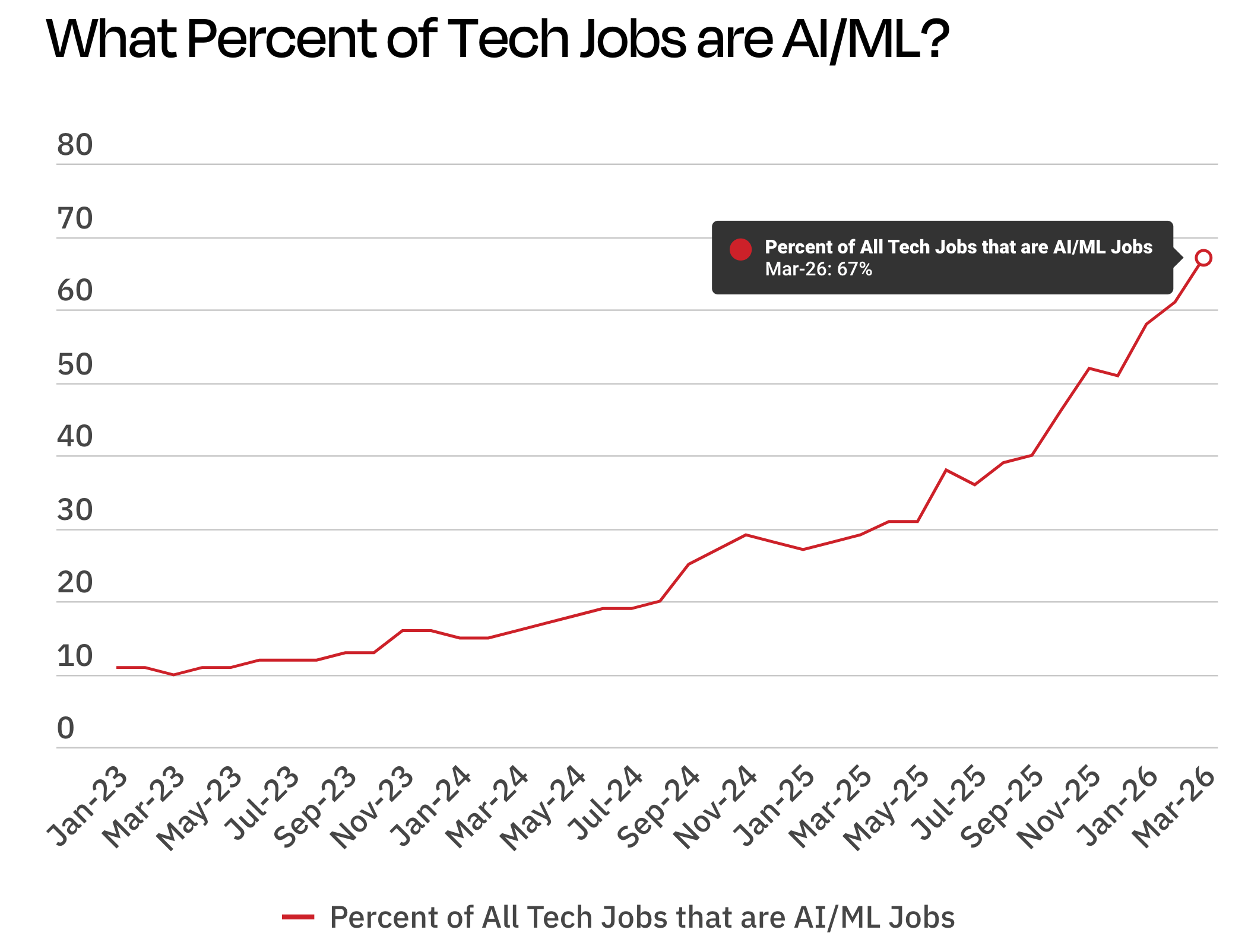
Dice’s finding that 67% of tech postings now mention AI skills is important, but it does not mean every interview is turning into an LLM exam. Across 30 recent approved or published interview experiences in IQ’s annotation database, 24 mentioned behavioral rounds and 18 mentioned SQL. Far fewer centered on pure Python implementation or a standalone machine learning deep dive.
That split matches the broader labor story. BCG estimates that 50% to 55% of U.S. jobs will be reshaped by AI over the next two to three years, but the firm argues that many roles will be augmented rather than cleanly replaced. Findings from Stanford’s AI Index 2026 point to the same pattern, noting that while AI-related job postings are rising quickly, interviews still evaluate core skills like SQL, experimentation, and business judgment.
In practice, AI is becoming part of the workflow to speed up execution, but not enough to completely replace fundamentals that carry tradeoff decisions and accountability. Candidates are still expected to explain their reasoning, validate outputs, and connect analysis to real decisions.
Overall, the same logic applies to data and analytics hiring in finance and insurance. Employers may now assume a baseline level of AI familiarity. However, they still need candidates who can choose the right metric, explain uncertainty, communicate risk, and defend a recommendation to a non technical stakeholder.
How Candidates Can Adapt
To leverage the hiring demand in finance and insurance, candidates must first build two or three resume stories that translate technical work into business consequences. A model that improved accuracy by 4% matters more when the candidate can explain what that did for industry-relevant outcomes, such as fraud loss, claims handling time, or customer retention.
Second, it helps to practice SQL and case work in the format companies actually use. That means messy data, incomplete assumptions, and follow up questions about tradeoffs. For many candidates, the missing step is not more solo prep but a realistic dress rehearsal, which is why mock interviews matter more when hiring shifts toward conversational and case based screens.
Lastly, AI must be treated as a workflow tool, not a substitute for thinking. Candidates should be ready to explain how they would use AI to speed up analysis, documentation, or debugging, and where they would slow down to verify output. In regulated industries, that distinction matters because an employer is evaluating trust as much as speed.
The Bottom Line: Human Judgment Still Matters
The fresh hiring data from Dice does point to a brighter market in 2026, especially in insurance and banking. But the candidate takeaway is not “learn one AI tool and apply everywhere.” It is that more openings are showing up in sectors where interviews map closely to real work, and that work demands business judgment, communication, and comfort with ambiguity.
That makes this a good market for candidates who can do more than pass a technical screen. The strongest applicants will show they can use AI, write solid SQL, explain a messy decision, and connect their work to risk, revenue, or operations. If insurance and banking keep leading the hiring rebound, that mix will likely matter even more through the rest of 2026.