
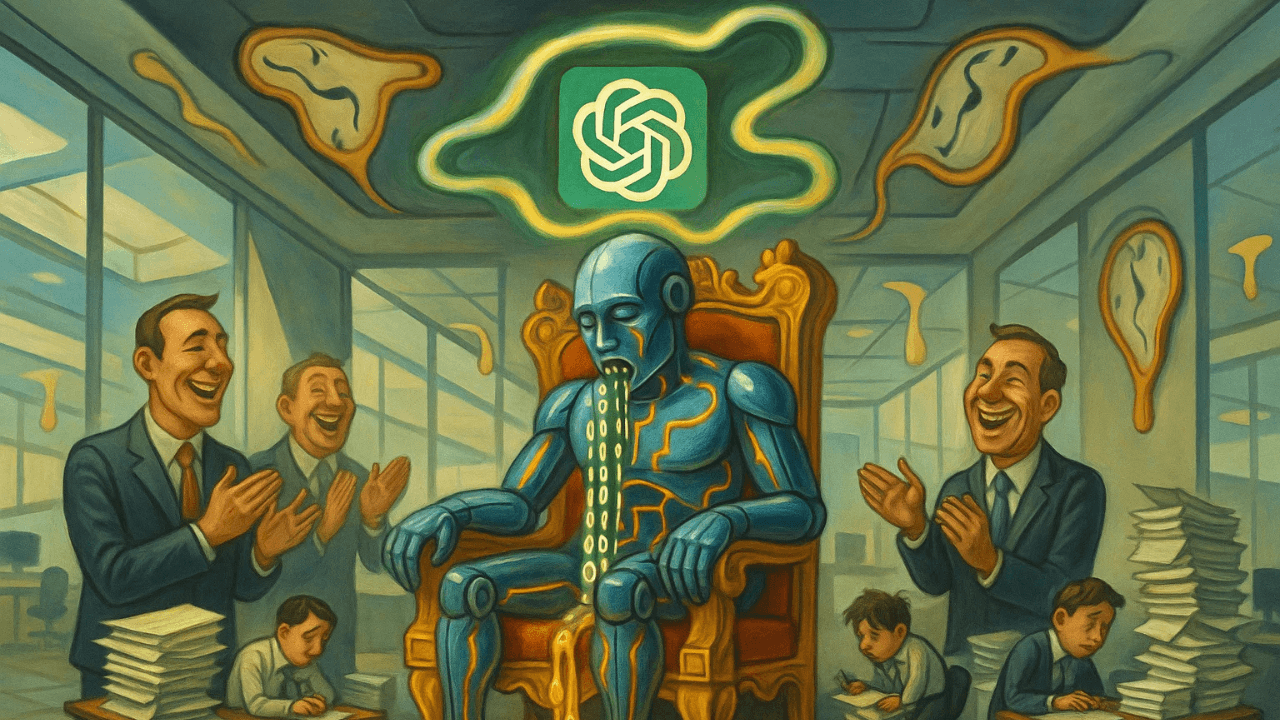
MIT says AI isn’t replacing you… it’s just wasting your boss’s money


Introduction
If you are feeling anxious about whether AI will take your job, MIT has some surprising news. A new study just revealed that nearly every company trying to use AI is failing to see any return on it.
The report, The GenAI Divide: State of AI in Business 2025, found that fewer than one in ten AI pilots make any real money. Only 5 percent of projects are creating millions in value. The rest? They are eating up budgets without improving the bottom line.
This might sound discouraging, but for job seekers it could actually be good news. Companies are still struggling to figure out how to make AI useful, which means human problem solving is still at the center of real business results.
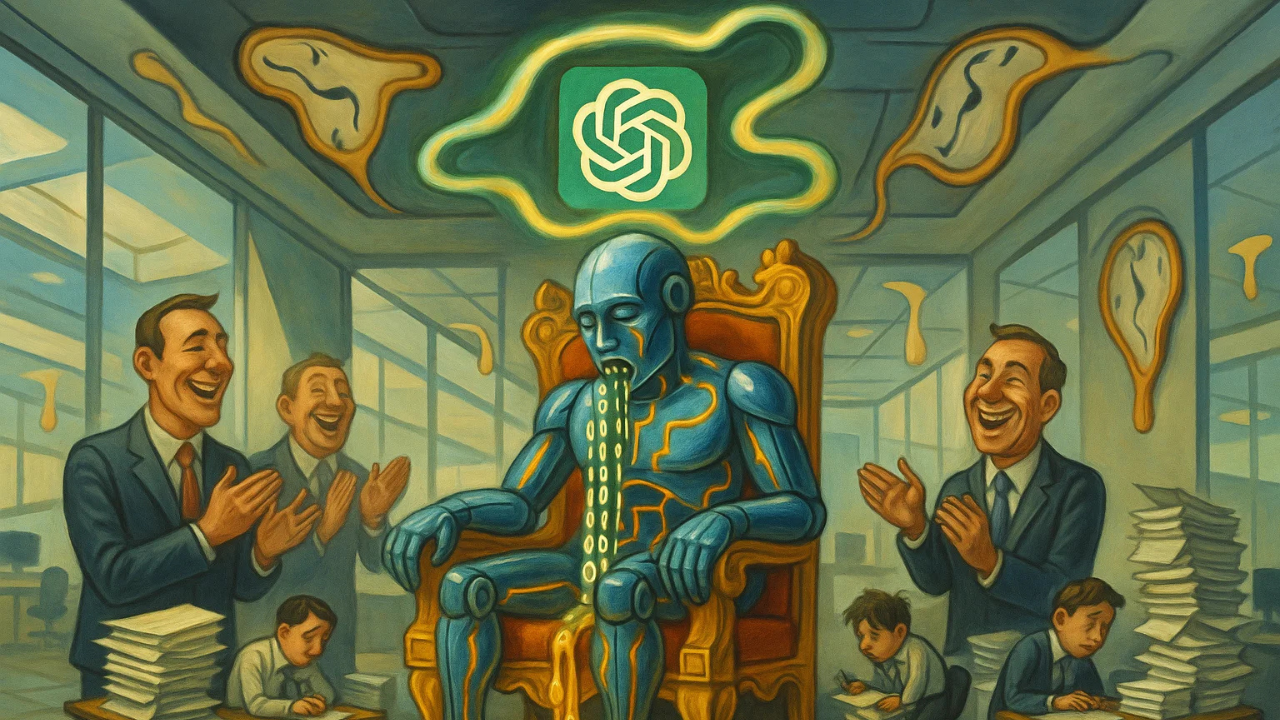
Why Companies Are Getting It Wrong
MIT’s research shows the issue is not with the AI tools but with how leaders are using them. Most are throwing money into flashy sales and marketing software that looks impressive but rarely moves the needle.
The real value shows up in less glamorous areas like finance, supply chains, and operations. Think about streamlining invoicing, automating back-office work, and replacing manual data entry. Companies that succeed with AI are using it to free up employees to do higher-value work, not to replace them outright.
That is a critical reminder for job seekers: the skills that matter most are not about building flashy demos. They are about understanding processes, spotting inefficiencies, and knowing how to apply tools to fix them.
Startups Are Winning by Staying Focused
Aditya Challapally, the report’s lead author, pointed out that small startups run by 20-year-olds are doing better than Fortune 500 giants. These startups are growing revenues from zero to $20 million in a year because they pick one problem and solve it with AI.
For job seekers, this means two things. First, smaller companies may actually be better places to learn and grow since they are applying AI in focused, practical ways. Second, the best opportunities will come from organizations that understand their pain points and use AI to remove them, not the ones chasing hype.

The AI Bubble and What It Means for Workers
MIT’s findings line up with what OpenAI CEO Sam Altman said recently. He warned that an AI bubble could pop, and investors could lose billions. While that is bad for hype-driven stock prices, it also means AI adoption will be slower than some fear.
Instead of mass layoffs, most companies will be experimenting for years before they figure out how to use AI effectively. That buys workers time to adapt, learn, and grow their skills.
What Workers Should Do Next
The clear takeaway is that jobs are not disappearing overnight. But the nature of jobs is shifting. Companies need people who can:
- Recognize where AI can actually save time or money.
- Bridge the gap between business needs and technical tools.
- Work with automation rather than ignore it.
Such is the case even for entry-level jobs, as explained in the video above. More and more employers are prioritizing entry-level employees with sophisticated AI skills, especially those among younger generations.
If you are job hunting, highlight your ability to solve problems, adapt quickly, and use AI tools in practical ways. Do not just say you know how to “use ChatGPT.” Show how you can improve workflows or save money with it.
The Bottom Line
Most companies are failing with AI. That should reassure job seekers that human skills are still essential. But it should also motivate you to lean in. The winners in the job market will be the people who treat AI as a tool, not a threat, and who know how to connect it to real business value.
In other words: AI is not replacing you anytime soon, but the person who learns to use it better than you just might.