

365 Data Science: 69.3% of Data Analyst Jobs Now Prefer Specialists

Data Analyst Hiring Trends Shift toward Specialization
Domain-specific data interviews are becoming a clearer part of the hiring market. In its 2026 data analyst job outlook, 365 Data Science analyzed 1,355 Glassdoor US job postings and found that 69.3% were looking for domain experts, while 30.7% were looking for more versatile professionals.
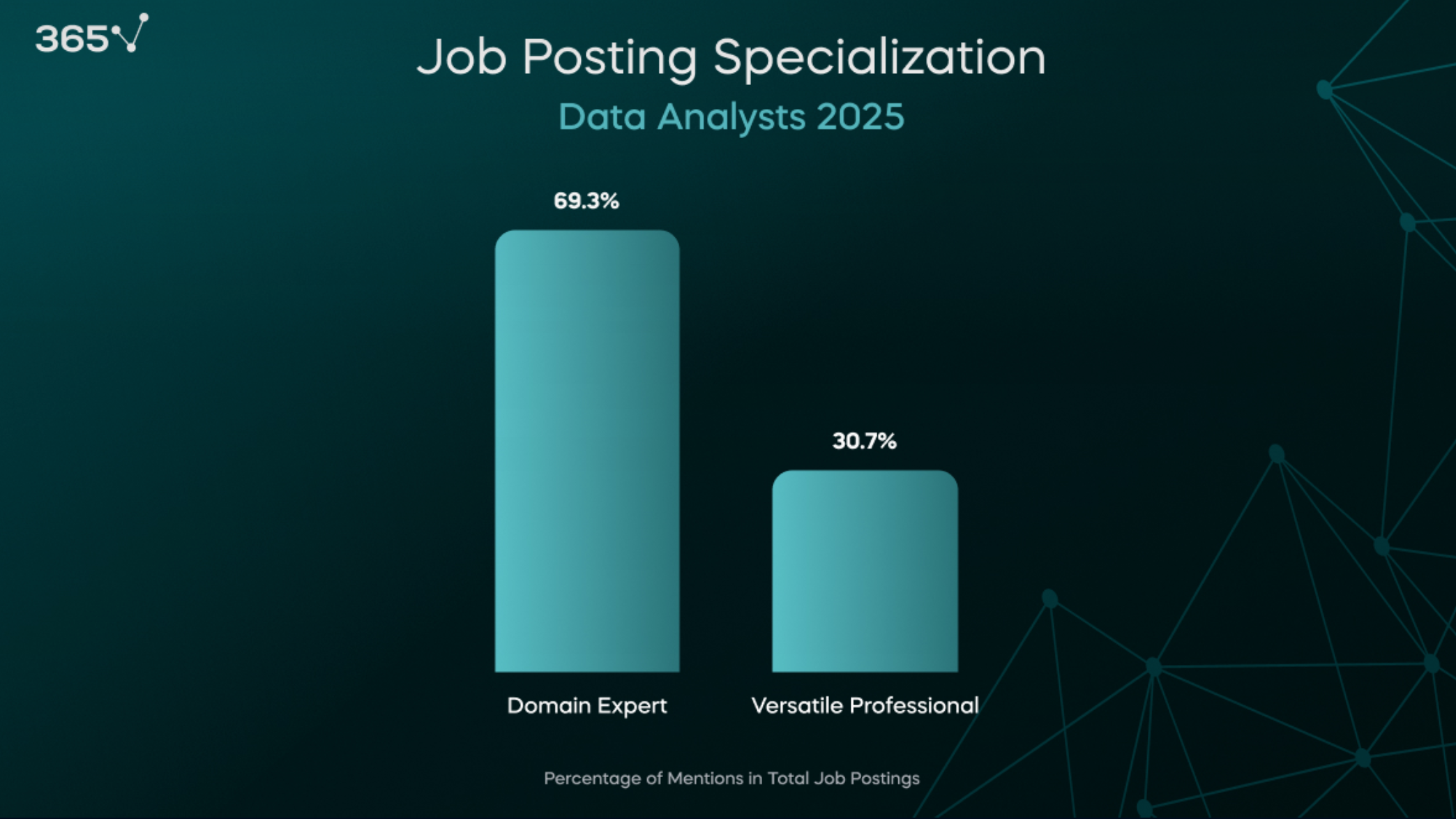
Source: 365 Data Science’s Data Analyst Job Outlook 2026
That split matters because it changes what a strong candidate looks like. Employers may still ask for SQL, statistics, dashboards, and business communication, but they increasingly want those skills applied inside a real operating context such as fraud, loyalty, risk, pricing, or marketing measurement.
Recent IQ interview signals suggest the same shift is already happening inside the room. Instead of being asked to prove they have broad familiarity with every tool, candidates are more often expected to show how they would reason through the specific business problems the team already owns.
Domain-Specific Data Interviews Are Becoming A Real Hiring Filter
The 365 Data Science report is useful because it does more than say data roles are still growing. It shows what kind of data candidates companies seem to prefer. The report says employers still prize core analytical skills, with Excel appearing in 41.3% of postings, Tableau in 28.1%, and Power BI in 24.7%. But it also describes business acumen and communication as part of the standard profile, not a bonus skill.
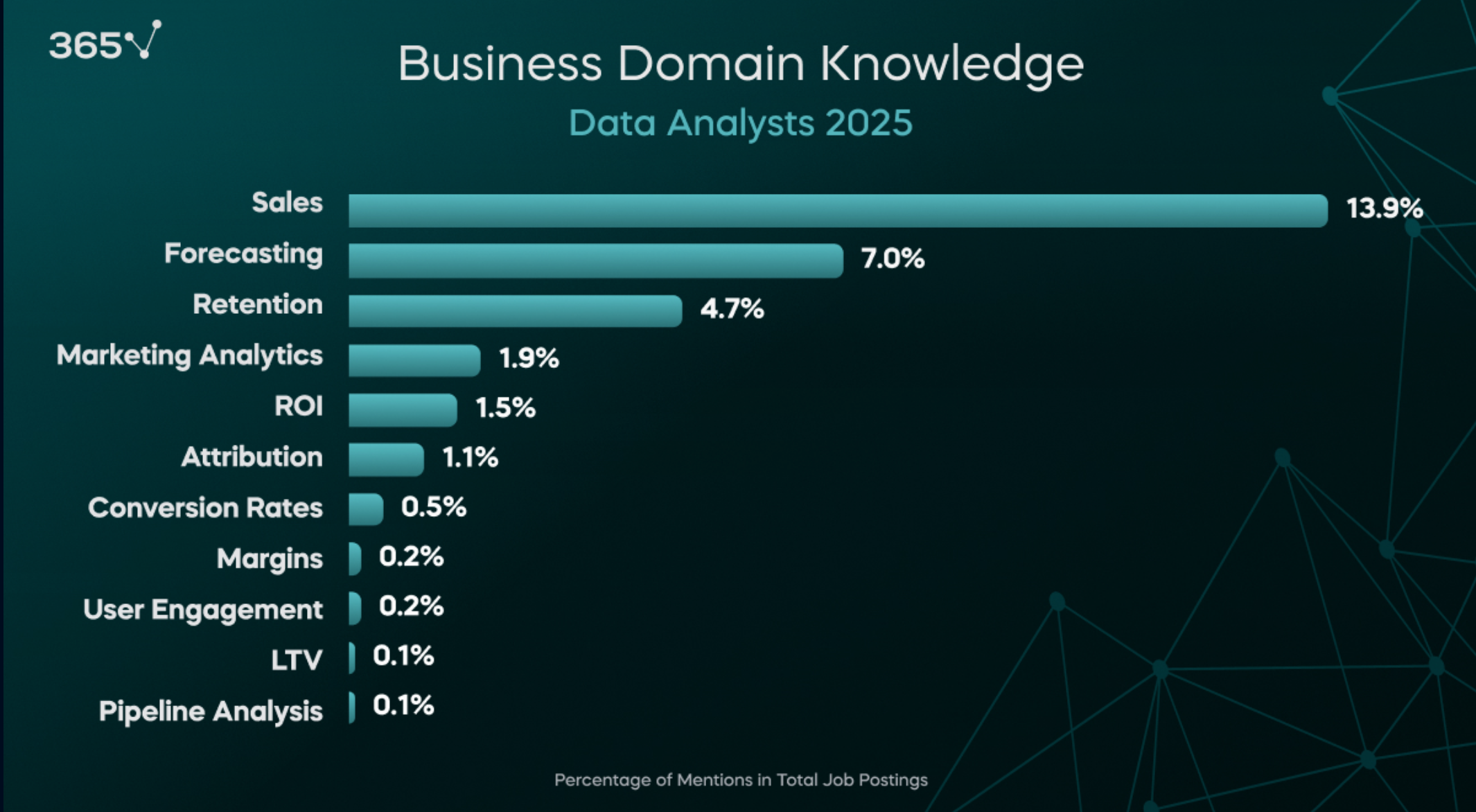
That combination points to a narrower definition of readiness that goes beyond someone who can query a table or build a dashboard. Teams want someone who can use those tools inside the logic of the business, which usually means knowing what metrics matter, what tradeoffs are acceptable, and what kinds of mistakes the team can least afford.
What Recent Interview Query Signals Show
Recent approved interview experiences gathered by Interview Query point in the same direction. One candidate interviewing for a senior decision science role was given a fraud take-home with real data and said the main test was not model complexity, but whether the reasoning and tradeoffs could be explained clearly.
Another candidate interviewing for a data role on an airline loyalty team was asked to present dashboard and ETL work, then explain what metrics mattered for adoption, conversion, and customer value in that specific business unit.
A third candidate interviewing for a risk-focused analyst role described a SQL prompt where the harder part was surfacing the assumptions needed before writing the query. That is a different kind of difficulty from generic SQL screening.
AI Is Raising the Value of Context-Specific Judgment
The broader market data supports that reading. Drawing on data from 6 million enterprise learners across nearly 7,000 organizations, Coursera’s 2026 Job Skills Report found a 234% year over year increase in GenAI enrollments and a 120% average increase in critical thinking enrollments across analyzed career areas. In its data section, Coursera says data professionals are shifting from hands-on database work toward managing AI layers and using human judgment to validate outputs.
A recent breakdown of 2026 data hiring trends also found that companies are compressing more real-world evaluation into fewer stages, often replacing generic technical screens with case-based discussions tied directly to business impact. That helps explain why specialized interviews feel tougher and sometimes longer, even when AI makes some execution faster. Once tool familiarity becomes easier to acquire, employers need a different way to separate candidates who can operate in production settings from candidates who only sound current.
Today’s Interview Loops Are Job Simulations
Some of the clearest recent IQ examples look less like trivia checks and more like compact versions of the actual role. One marketing-focused data science candidate described a take-home centered on an intent-to-treat experimentation problem, followed by discussions about exposure bias, lift measurement, and budget allocation.
Another candidate with forecasting experience was pushed to defend model choice, evaluation logic, and why a particular approach fit a resale marketplace rather than a different kind of business. That is also why broad project walkthroughs feel less safe than they used to. Interviewers often want the part that would only make sense in that team, industry, or workflow.
What Candidates Should Change in Prep Now
The prep implication is not that candidates need to become experts in every industry. It is that they should stop preparing as if one generic data story will transfer cleanly across all roles. A better approach is to build two or three targeted narratives around the domains they are actually applying to, then practice the metrics, constraints, assumptions, and stakeholder tradeoffs that belong to each one.
The specifics of that preparation will usually depend on the kind of team and business problem the role supports:
- Marketing roles: Candidates should be comfortable discussing incrementality, attribution limits, channel bias, CAC efficiency, and budget allocation tradeoffs.
- Risk or fraud roles: Interviewers often care more about operational judgment, including false positives, review queues, escalation workflows, and the real cost of intervention mistakes.
- Loyalty, pricing, or product roles: Strong candidates usually show they understand how the business makes money, what metrics define a “good” decision, and how competing incentives affect product outcomes.
One reason these interviews feel harder is that broad project walkthroughs are often pushed into more skeptical, domain-specific follow-ups. Practicing those conversations in a realistic setting, such as through live case-style discussions or mock interviews, can help candidates see whether their examples still hold up once interviewers start probing assumptions, tradeoffs, and business context.
The Bottom Line
365 Data Science’s latest job market review suggests data hiring is still rewarding specialists more than generalists, at least in how employers describe the role on paper. Recent IQ interview signals suggest the interview process is adapting to that same reality, especially in business-facing and domain-heavy data roles.
The practical effect is a more specific kind of interview bar. Candidates still need the fundamentals, but the stronger signal now is whether they can place those fundamentals inside a business context with clear metrics, believable assumptions, and defensible tradeoffs. That is likely to matter even more as AI makes generic analytical fluency easier to fake.