
AI Is Overhyped as a Job Killer, Says Google Cloud CEO


The AI Job Panic
Ever since artificial intelligence started creeping into the workplace, people have been bracing for mass layoffs. And to be fair, the numbers haven’t been reassuring. AI and automation have become the quiet justification behind corporate restructurings and hiring freezes across multiple industries.
Consulting company PwC, for instance, admitted its entry-level intake dropped this year because of fewer job postings for its “AI-exposed” roles. Meanwhile, tech giants like Accenture, Meta, and Intel have all doubled down on automation and trimmed their workforces in the process.
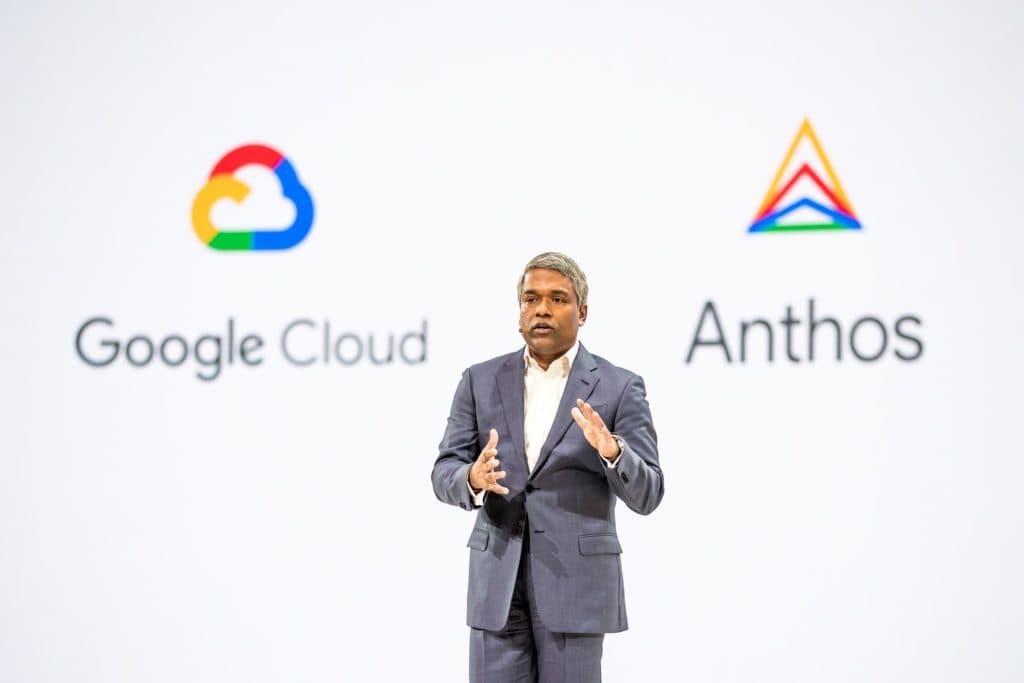
But while the AI doom narrative gets louder, Google Cloud CEO Thomas Kurian isn’t buying it. He argues that fears of AI wiping out entire professions are “overhyped” — and that the reality is far more nuanced.
Kurian’s Message: AI Will Reshape Work, Not Destroy It

Kurian, who’s led Google Cloud for three years, believes AI’s impact on jobs has been blown out of proportion. Believing there’s a middle ground, he says that the technology isn’t replacing people but simply expanding what they can do.
He pointed to customer service as a prime example. When Google Cloud rolled out its AI tools, some clients immediately asked if they’d still need human agents. But hardly any of their clients laid off their workers, as they used AI-powered tools to speed up responses and handle more complex cases.
His view echoes that of Google CEO Sundar Pichai, who said AI has boosted their engineers’ productivity by roughly 10%. Thus, for Google’s leadership, AI isn’t the end of work, but an accelerator for productivity and innovation.
Not Everyone’s Buying Google’s Optimism
Still, it’s worth remembering that Google sits on the winning side of this shift, since it sells the very tools that could automate people out of jobs. Thus, it’s no surprise not everyone shares Kurian’s optimism.
Recently a report from Senator Bernie Sanders’ office warned that AI and automation could wipe out nearly 100 million jobs over the next decade, hitting tech, finance, and customer service roles the hardest.

Even JPMorgan Chase CEO Jamie Dimon — who has praised AI for saving the bank $2 billion a year — admits some roles are disappearing. Since AI is being integrated into all operations from risk management to customer support, the company is focusing on retraining and redeploying workers into new positions that can’t be easily replicated or automated.
These perspectives highlight the tension: AI might not “kill” work, but it’s absolutely changing the shape of it. The line between replacement and reinvention is getting thinner by the quarter.
A More Honest Reality Check
Overall, Kurian’s comments don’t deny the AI disruption that continues to make ripples across industries and job markets.
Rather, they reframe the conversation around companies’ ability to adapt and use AI to enhance human workers, not replace them, in creating value. But the pace and pain of that change will depend on how both sides adapt.
For companies, the real challenge isn’t whether to use AI, but how to integrate it without gutting institutional knowledge. For workers, the lesson is equally clear: denial won’t help. Learning how to work with AI — not around it — is quickly becoming an imperative, not an optional skill.
So maybe Kurian’s right: AI isn’t the job killer people make it out to be. But it’s definitely the new job test for everyone.