Getting ready for a Software Engineer interview at Alpha Clinical Systems? The Alpha Clinical Systems Software Engineer interview process typically spans a range of question topics and evaluates skills in areas like Core Java, Spring and Microservices architecture, system design, and troubleshooting real-world technical challenges. At Alpha Clinical Systems, interview preparation is especially important because engineers are expected to build scalable, secure, and reliable healthcare software solutions that integrate seamlessly with clinical workflows and comply with industry standards. Demonstrating both technical expertise and the ability to communicate complex concepts clearly is crucial for success in this role.
In preparing for the interview, you should:
At Interview Query, we regularly analyze interview experience data shared by candidates. This guide uses that data to provide an overview of the Alpha Clinical Systems Software Engineer interview process, along with sample questions and preparation tips tailored to help you succeed.
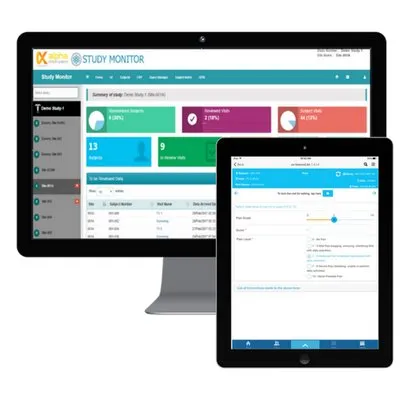
Alpha Clinical Systems (ACS) is a leading provider of affordable, flexible, and comprehensive eSource solutions for life sciences organizations. The company’s flagship product, ACS360, is a fully integrated, cloud-based platform designed to modernize and streamline clinical trials by capturing eSource data directly, with or without existing EDC systems. ACS360 automates workflows across the clinical trial process—including study design, eSource data capture, eConsent, ePRO/eCOA, drug inventory management, recruitment, regulatory documentation, and budget management—eliminating manual errors and inefficiencies. As a Software Engineer, you will contribute to building and enhancing technology that accelerates and improves the quality of clinical research for sponsors, sites, and CROs.
As a Software Engineer at Alpha Clinical Systems, you will design, develop, and maintain software solutions that support clinical research and healthcare operations. Your work involves collaborating with product managers, QA teams, and other engineers to build secure, scalable applications tailored for clinical data management and regulatory compliance. Typical responsibilities include writing clean code, troubleshooting issues, and implementing new features to enhance system functionality and user experience. This role is vital in ensuring the reliability and effectiveness of Alpha Clinical Systems’ products, ultimately helping clients streamline clinical trials and healthcare processes.
The process begins with an initial screening of applications and resumes by the recruitment team or hiring manager. At this stage, emphasis is placed on candidates’ experience with Java, Spring, and microservices architecture, as well as a demonstrated ability to develop, maintain, and optimize scalable software systems. Strong knowledge of software engineering principles, familiarity with RESTful APIs, and experience in building secure, maintainable applications are also closely reviewed. To prepare, ensure your resume highlights relevant projects, technical skills, and quantifiable achievements that align with modern backend development and enterprise software solutions.
Following the resume review, selected candidates are contacted for a brief recruiter screen, typically conducted by a member of the HR or talent acquisition team. This conversation is designed to clarify your background, motivations for applying, interest in Alpha Clinical Systems, and overall fit for the software engineering culture. Expect high-level discussions about your technical background, communication skills, and understanding of the company’s mission. Preparation should include a concise explanation of your experience, reasons for seeking this role, and alignment with the company’s values and healthcare technology focus.
The technical interview is usually conducted by a senior engineer or engineering manager and focuses on assessing your core programming skills, particularly in Java and Spring frameworks. You can expect questions on microservices architecture, RESTful API design, object-oriented programming, and best practices for building maintainable and scalable systems. You may be asked to solve practical problems, explain your approach to common backend challenges, and discuss your experience with topics such as data security, performance optimization, and system integration. To prepare, review core Java concepts, Spring Boot fundamentals, and be ready to discuss your experience with real-world system design and troubleshooting.
The behavioral round, often conducted by a senior leader or the CEO, evaluates your interpersonal skills, cultural fit, and alignment with the company’s values and long-term vision. This stage may include discussions about your previous teamwork experiences, handling of challenges in software projects, and adaptability in a dynamic environment. You should be prepared to discuss your strengths and weaknesses, how you approach problem-solving in high-stakes situations, and what motivates you to work in healthcare technology. Preparation should focus on articulating your professional journey, demonstrating emotional intelligence, and connecting your personal goals to the company’s mission.
At Alpha Clinical Systems, the final round often takes the form of an in-depth conversation with executive leadership, such as the CEO. This meeting is both an opportunity for the company to present its vision and for you to showcase your understanding of the organization’s goals, ask insightful questions, and discuss compensation and potential career growth. Expect a blend of high-level technical discussion and conversation about your aspirations, commitment to quality, and ability to contribute to the company’s success in the clinical software domain. To prepare, research the company’s products and recent initiatives, and be ready to engage thoughtfully on how your expertise can drive innovation and value.
After successful completion of the previous rounds, the HR team or hiring manager will extend a formal offer, including details on compensation, benefits, and next steps. This stage is your opportunity to clarify any questions regarding the role, negotiate the offer if necessary, and confirm alignment on expectations and onboarding timelines. Preparation should include a clear understanding of your market value, desired benefits, and any specific requirements you may have for your new role.
The typical Alpha Clinical Systems Software Engineer interview process spans 1-3 weeks from initial application to offer, with some candidates moving through the process more quickly if their profiles closely match the company’s needs. Fast-track candidates may complete both interviews within a week, while the standard pace allows for a few days between each stage to accommodate scheduling and decision-making. The process is streamlined, with clear communication at each step, allowing candidates to move efficiently from technical evaluation to executive discussion.
Next, let’s dive into the specific types of interview questions you can expect throughout the interview process.
System and software design questions assess your ability to architect scalable, reliable, and secure solutions—key for any software engineering role in a healthcare technology environment. Focus on demonstrating your understanding of distributed systems, data privacy, and the unique requirements of clinical applications.
3.1.1 Design a secure and scalable messaging system for a financial institution.
Highlight your approach to system scalability, end-to-end encryption, and compliance with industry-specific regulations. Discuss how you would ensure both user privacy and high system availability.
3.1.2 System design for a digital classroom service.
Explain your choices for technology stack, user authentication, and real-time data synchronization. Address how you would support different user roles and ensure data integrity across the platform.
3.1.3 Design a data warehouse for a new online retailer.
Discuss schema design, ETL processes, and how you would optimize for both query performance and scalability. Consider how you would handle evolving data requirements as the business grows.
3.1.4 Design and describe key components of a RAG pipeline.
Outline the architecture for retrieval-augmented generation, focusing on data ingestion, retrieval mechanisms, and integration with downstream applications. Emphasize how you would monitor and evaluate system performance.
These questions evaluate your ability to build, optimize, and maintain robust data pipelines—critical for healthcare and clinical systems where data quality and timeliness matter. Be ready to discuss ETL, data cleaning, and real-time analytics.
3.2.1 Design a data pipeline for hourly user analytics.
Describe your approach to ingesting, processing, and aggregating high-volume user data. Include considerations for fault tolerance and how you would ensure data accuracy.
3.2.2 Write a query to compute the average time it takes for each user to respond to the previous system message.
Explain how you would use window functions and time calculations to align and analyze user interactions. Address how you would handle missing or out-of-order data.
3.2.3 Write a query to find all dates where the hospital released more patients than the day prior.
Discuss how to use window functions or self-joins to compare daily counts efficiently. Mention how you would validate data accuracy and handle edge cases like missing dates.
3.2.4 Challenges of specific student test score layouts, recommended formatting changes for enhanced analysis, and common issues found in "messy" datasets.
Walk through your process for profiling, cleaning, and reformatting complex datasets for downstream analytics. Highlight tools and techniques for automating data validation.
Questions in this category test your ability to define, measure, and analyze key metrics—vital for tracking clinical outcomes, user engagement, and product performance. Expect to discuss A/B testing, metric selection, and experiment design.
3.3.1 The role of A/B testing in measuring the success rate of an analytics experiment.
Describe how you would set up and interpret an A/B test, including choosing metrics, ensuring statistical significance, and drawing actionable conclusions.
3.3.2 Write a query to calculate the conversion rate for each trial experiment variant.
Explain how you would aggregate trial data, handle missing values, and compare performance across variants. Discuss how to present results for business decision-making.
3.3.3 Create and write queries for health metrics for stack overflow.
Show your approach to defining key health metrics, writing efficient queries, and visualizing trends over time. Address how you would ensure metrics align with business goals.
Machine learning and modeling questions assess your ability to design, implement, and validate models that drive clinical or operational improvements. Focus on your end-to-end workflow, from data preparation to model evaluation.
3.4.1 Creating a machine learning model for evaluating a patient's health.
Discuss your approach to feature selection, model choice, and validation techniques. Emphasize how you would handle sensitive clinical data and communicate risk scores to stakeholders.
3.4.2 Designing an ML system to extract financial insights from market data for improved bank decision-making.
Outline your system design for integrating external APIs, preprocessing data, and deploying models for real-time inference. Address how you would monitor model performance and manage data drift.
Effective communication is essential for translating complex analyses into actionable insights for both technical and non-technical stakeholders. These questions test your ability to distill complexity and drive impact through clear storytelling.
3.5.1 How to present complex data insights with clarity and adaptability tailored to a specific audience.
Describe your approach to audience analysis, visualization techniques, and adapting your message for maximum impact.
3.5.2 Demystifying data for non-technical users through visualization and clear communication.
Share strategies for simplifying technical findings, choosing the right visuals, and fostering data-driven decision-making across teams.
3.5.3 Making data-driven insights actionable for those without technical expertise.
Explain how you break down statistical concepts, use analogies, and tailor recommendations to diverse audiences.
3.5.4 How would you answer when an Interviewer asks why you applied to their company?
Focus on aligning your values and skills with the company's mission and needs. Highlight your motivation and what excites you about their products or impact.
3.6.1 Tell me about a time you used data to make a decision.
Demonstrate how your analysis led to a specific business or product outcome. Highlight your process from data gathering to recommendation and impact.
3.6.2 Describe a challenging data project and how you handled it.
Share a story where you faced technical or organizational hurdles, your problem-solving steps, and the final result.
3.6.3 How do you handle unclear requirements or ambiguity?
Explain your approach to clarifying goals, collaborating with stakeholders, and iterating on solutions when initial direction is lacking.
3.6.4 Tell me about a time when your colleagues didn’t agree with your approach. What did you do to bring them into the conversation and address their concerns?
Discuss how you encouraged open dialogue, presented evidence, and worked towards a consensus.
3.6.5 Talk about a time when you had trouble communicating with stakeholders. How were you able to overcome it?
Describe techniques you used to bridge communication gaps, such as simplifying language or using visuals.
3.6.6 Tell me about a time you delivered critical insights even though 30% of the dataset had nulls. What analytical trade-offs did you make?
Walk through your process for handling missing data and how you communicated limitations and confidence to decision-makers.
3.6.7 Give an example of automating recurrent data-quality checks so the same dirty-data crisis doesn’t happen again.
Share how you identified the root cause, implemented automation, and measured the impact on workflow efficiency.
3.6.8 Tell me about a situation where you had to influence stakeholders without formal authority to adopt a data-driven recommendation.
Highlight your persuasion skills, use of data storytelling, and how you built alignment across teams.
3.6.9 Describe a time you had to deliver an overnight churn report and still guarantee the numbers were “executive reliable.” How did you balance speed with data accuracy?
Explain your triage process, prioritization, and communication of data quality under tight deadlines.
3.6.10 Share a story where you used data prototypes or wireframes to align stakeholders with very different visions of the final deliverable.
Detail how you leveraged rapid prototyping to gather feedback, iterate quickly, and achieve stakeholder buy-in.
Understand the mission and impact of Alpha Clinical Systems in the healthcare technology space.
Alpha Clinical Systems builds solutions that directly affect clinical trial efficiency, data accuracy, and patient safety. Before your interview, immerse yourself in the company’s vision—especially how ACS360 streamlines workflows for sponsors, sites, and CROs. Be prepared to discuss how your engineering skills can contribute to the reliability and innovation of eSource, eConsent, and ePRO/eCOA technologies, and why you are passionate about improving outcomes in clinical research.
Research ACS360’s product features and recent initiatives.
Take time to study the ACS360 platform’s modules, such as eSource data capture, drug inventory management, and regulatory documentation. Familiarize yourself with how these features are integrated and how they address common pain points in clinical trials. Be ready to reference specific product capabilities and suggest technical improvements or new ideas that align with the company’s goals.
Showcase your understanding of compliance and data security in healthcare software.
Alpha Clinical Systems operates in a highly regulated environment where HIPAA, GDPR, and FDA guidelines are paramount. Highlight your experience or knowledge in building secure applications, handling sensitive health data, and maintaining audit trails. Discuss how you would design systems to meet regulatory requirements without sacrificing usability or scalability.
Demonstrate your commitment to quality and reliability.
Clinical software demands near-zero tolerance for errors. Share examples of your attention to detail, your approach to testing, and how you ensure software reliability in production environments. Emphasize your understanding of the impact that software bugs or downtime can have on clinical trials and patient safety.
Master Java, Spring, and microservices architecture fundamentals.
Alpha Clinical Systems relies heavily on Java and Spring for backend development. Brush up on core Java concepts, Spring Boot configuration, dependency injection, and RESTful API design. Practice articulating your approach to building scalable microservices, handling inter-service communication, and optimizing for maintainability and performance.
Prepare to discuss real-world system design and troubleshooting.
Expect to be asked about designing robust, scalable systems—possibly for clinical workflows or data pipelines. Use examples from your experience to walk through your design choices, trade-offs, and how you would handle edge cases like high availability, data integrity, and disaster recovery. Be ready to troubleshoot hypothetical issues and explain your debugging process.
Show your skills in building and optimizing data pipelines for healthcare applications.
Clinical software often depends on timely, accurate data processing. Demonstrate your experience with ETL pipelines, data validation, and aggregation techniques. Explain how you would handle messy datasets, automate data-quality checks, and ensure that analytics are both reliable and actionable for clinical stakeholders.
Highlight your ability to communicate complex technical concepts to diverse audiences.
Software Engineers at Alpha Clinical Systems collaborate with cross-functional teams, including product managers, QA, and clinical experts. Practice explaining your technical decisions using clear, jargon-free language. Be prepared to adapt your explanations for both technical and non-technical stakeholders, using examples, analogies, or visual aids when appropriate.
Emphasize your experience with experimentation, metrics, and data-driven decision-making.
Clinical software is increasingly data-driven, with frequent use of A/B testing and metric tracking. Be ready to discuss how you design experiments, choose meaningful metrics, and interpret results to drive product improvements. Share stories of using data to influence decisions, optimize features, or enhance user experience.
Demonstrate adaptability and teamwork in dynamic, high-stakes environments.
Alpha Clinical Systems values engineers who thrive in collaborative settings and can navigate ambiguity. Prepare examples of how you’ve handled unclear requirements, built consensus among colleagues, or adapted quickly to changing project priorities. Show that you are proactive, resilient, and motivated to deliver solutions that matter.
Be ready to discuss your motivation for joining Alpha Clinical Systems and your alignment with their mission.
When asked why you want to work at Alpha Clinical Systems, connect your personal values and career goals to the company’s impact on clinical research and patient care. Share what excites you about their products, culture, and the opportunity to make a real difference in healthcare technology.
5.1 How hard is the Alpha Clinical Systems Software Engineer interview?
The Alpha Clinical Systems Software Engineer interview is challenging, particularly for those new to healthcare technology. Expect rigorous evaluation of your Java, Spring, and microservices architecture skills, along with system design and troubleshooting. You’ll also be tested on your ability to build secure, reliable software that complies with healthcare regulations. The process rewards candidates who demonstrate both deep technical expertise and clear communication, especially given the importance of clinical data accuracy and patient safety.
5.2 How many interview rounds does Alpha Clinical Systems have for Software Engineer?
Typically, the process includes five main stages: application and resume review, recruiter screen, technical/case/skills round, behavioral interview, and a final onsite or executive round. Some candidates may experience slight variations, but most will go through at least four interviews before reaching the offer stage.
5.3 Does Alpha Clinical Systems ask for take-home assignments for Software Engineer?
While Alpha Clinical Systems primarily relies on live technical interviews and system design discussions, some candidates may be given a short take-home coding or design exercise, especially if the team wants to assess your real-world problem-solving approach. The focus is on practical healthcare-related scenarios, such as designing scalable data pipelines or secure APIs.
5.4 What skills are required for the Alpha Clinical Systems Software Engineer?
Key skills include strong proficiency in Java and Spring frameworks, experience with microservices architecture, RESTful API design, and system integration. You should also be adept at troubleshooting, optimizing backend performance, and building secure, compliant software. Familiarity with healthcare data standards, data privacy (HIPAA, GDPR), and experience with ETL pipelines or analytics is highly valued. Excellent communication and collaboration are essential for success.
5.5 How long does the Alpha Clinical Systems Software Engineer hiring process take?
The entire process typically spans 1-3 weeks from initial application to offer, with some fast-track candidates completing it in as little as one week. Timelines may vary depending on scheduling, but Alpha Clinical Systems is known for clear, prompt communication throughout each stage.
5.6 What types of questions are asked in the Alpha Clinical Systems Software Engineer interview?
Expect a mix of technical questions on Java, Spring, microservices, and RESTful APIs, as well as system design and troubleshooting scenarios relevant to clinical software. You’ll also encounter data engineering, analytics, and machine learning questions, plus behavioral and communication-focused prompts designed to assess your fit for a collaborative, mission-driven team.
5.7 Does Alpha Clinical Systems give feedback after the Software Engineer interview?
Alpha Clinical Systems generally provides high-level feedback through recruiters, especially if you reach the later stages. While detailed technical feedback may be limited due to process constraints, you can expect clarity on next steps and suggestions for improvement if you are not selected.
5.8 What is the acceptance rate for Alpha Clinical Systems Software Engineer applicants?
The role is competitive, with an estimated acceptance rate of 3-7% for qualified applicants. Alpha Clinical Systems looks for candidates who not only excel technically but also align closely with their mission and culture.
5.9 Does Alpha Clinical Systems hire remote Software Engineer positions?
Yes, Alpha Clinical Systems offers remote Software Engineer positions, with opportunities for flexible work arrangements. Some roles may require occasional onsite visits for team collaboration or onboarding, but the company supports remote-first engineering teams.
Ready to ace your Alpha Clinical Systems Software Engineer interview? It’s not just about knowing the technical skills—you need to think like an Alpha Clinical Systems Software Engineer, solve problems under pressure, and connect your expertise to real business impact. That’s where Interview Query comes in with company-specific learning paths, mock interviews, and curated question banks tailored toward roles at Alpha Clinical Systems and similar companies.
With resources like the Alpha Clinical Systems Software Engineer Interview Guide and our latest case study practice sets, you’ll get access to real interview questions, detailed walkthroughs, and coaching support designed to boost both your technical skills and domain intuition.
Take the next step—explore more case study questions, try mock interviews, and browse targeted prep materials on Interview Query. Bookmark this guide or share it with peers prepping for similar roles. It could be the difference between applying and offering. You’ve got this!
