Alpha clinical systems Data Scientist Interview Guide

1. Introduction

Getting ready for a Data Scientist interview at Alpha Clinical Systems? The Alpha Clinical Systems Data Scientist interview process typically spans 4–6 question topics and evaluates skills in areas like experimental design, machine learning, data cleaning and preparation, and communicating actionable insights to diverse audiences. Interview preparation is especially important for this role at Alpha Clinical Systems, given the emphasis on translating complex healthcare data into strategic recommendations, building robust models for patient and operational analytics, and designing end-to-end data solutions that support clinical decision-making and business growth.

In preparing for the interview, you should:

  • Understand the core skills necessary for Data Scientist positions at Alpha Clinical Systems.
  • Gain insights into Alpha Clinical Systems’ Data Scientist interview structure and process.
  • Practice real Alpha Clinical Systems Data Scientist interview questions to sharpen your performance.

At Interview Query, we regularly analyze interview experience data shared by candidates. This guide uses that data to provide an overview of the Alpha Clinical Systems Data Scientist interview process, along with sample questions and preparation tips tailored to help you succeed.

1.2. What Alpha Clinical Systems Does

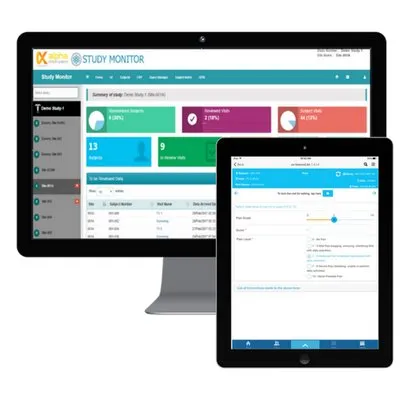
Alpha Clinical Systems (ACS) is a leading provider of innovative, cloud-based eSource solutions for life sciences companies, specializing in the modernization of clinical trials. Their flagship product, ACS360, is a comprehensive platform that streamlines and automates workflows across study design, data capture, and real-time visualization, eliminating slow, error-prone paper processes. Serving small to mid-size clinical sites, sponsors, and CROs, ACS360 integrates eSource, eConsent, ePRO/eCOA, drug inventory management, recruiting, regulatory documentation, and budget management. As a Data Scientist, you will contribute to advancing data-driven insights and process efficiencies that enhance clinical trial quality and compliance.

1.3. What does an Alpha Clinical Systems Data Scientist do?

As a Data Scientist at Alpha Clinical Systems, you will be responsible for analyzing complex clinical and operational datasets to uncover insights that support product development, clinical trial optimization, and business decision-making. You will work closely with cross-functional teams, including product managers, software engineers, and clinical experts, to develop predictive models, automate data processing, and generate actionable reports. Your contributions help improve the efficiency and accuracy of clinical trial management solutions, ultimately advancing the company’s mission to streamline clinical research processes and enhance patient outcomes. Candidates can expect to leverage advanced statistical methods, machine learning techniques, and domain expertise to drive innovation within the healthcare technology sector.

2. Overview of the Alpha Clinical Systems Interview Process

2.1 Stage 1: Application & Resume Review

The initial stage involves a thorough screening of your application materials, with emphasis on your experience in statistical modeling, machine learning, data pipeline design, and healthcare analytics. The review also considers your proficiency with Python, SQL, and data visualization tools, as well as your ability to communicate complex insights clearly. Typically conducted by the HR team and the data science hiring manager, this step ensures your background aligns with Alpha Clinical Systems’ focus on clinical data, patient analytics, and scalable data solutions. To prepare, tailor your resume to highlight relevant projects, technical skills, and any experience in healthcare or regulated environments.

2.2 Stage 2: Recruiter Screen

This stage is a 30-minute phone or video call with a recruiter, designed to assess your motivation for joining Alpha Clinical Systems and your understanding of the company’s mission in clinical data solutions. Expect questions about your career trajectory, how you’ve worked with cross-functional teams, and your familiarity with data-driven decision making. Preparation should include a concise narrative of your experience, clarity on why you’re interested in clinical data science, and readiness to discuss your approach to data challenges and communication with non-technical stakeholders.

2.3 Stage 3: Technical/Case/Skills Round

The technical round typically consists of one to two interviews led by senior data scientists or analytics leads. You’ll be challenged on your ability to design and implement data pipelines, conduct statistical analyses, clean and organize large datasets, and build predictive models—including those for patient risk assessment and healthcare outcomes. Expect case studies that simulate real-world scenarios, such as designing a RAG pipeline, evaluating the success of a clinical trial, or segmenting patient data for targeted interventions. You may also need to write SQL queries, code in Python, and explain concepts like p-values or logistic regression to a non-expert. Preparation should focus on practical experience with healthcare datasets, model development, data cleaning, and translating findings into actionable insights.

2.4 Stage 4: Behavioral Interview

Behavioral interviews are conducted by the hiring manager and sometimes a cross-functional panel. They assess your collaboration skills, adaptability, and ability to communicate technical concepts to clinicians, product managers, and executives. You’ll be asked to describe challenges in past data projects, how you presented complex findings to diverse audiences, and your approach to ethical considerations in clinical data science. Prepare by reflecting on specific examples of teamwork, leadership, and overcoming obstacles in data-driven environments, particularly within healthcare or regulated industries.

2.5 Stage 5: Final/Onsite Round

The final stage generally includes a series of interviews (virtual or onsite) with team members from data science, engineering, and product, as well as leadership. You may be asked to present a recent project, walk through your approach to designing scalable data solutions, and demonstrate your ability to synthesize large datasets into clear, actionable recommendations. This round often includes deeper technical challenges, system design questions, and a focus on your fit with Alpha Clinical Systems’ collaborative, mission-driven culture. Preparation should include practicing technical presentations, revisiting key projects, and preparing questions for the team about their data infrastructure and clinical analytics goals.

2.6 Stage 6: Offer & Negotiation

Once you successfully complete the interviews, the recruiter will reach out to discuss the offer package, including compensation, benefits, and start dates. Negotiation is typically handled by the recruiter in collaboration with HR and the hiring manager. Be prepared to discuss your expectations and any specific needs, such as remote work or professional development opportunities.

2.7 Average Timeline

The Alpha Clinical Systems Data Scientist interview process generally spans 3-5 weeks from initial application to offer. Fast-track candidates with highly relevant healthcare analytics experience may progress in as little as 2 weeks, while the standard timeline allows for 1 week between each stage to accommodate scheduling and team availability. Technical and onsite rounds may require additional time for project preparation or case study completion, especially when complex clinical datasets are involved.

Next, let’s dive into the types of interview questions you can expect during each stage of the Alpha Clinical Systems Data Scientist process.

3. Alpha Clinical Systems Data Scientist Sample Interview Questions

3.1. Machine Learning & Modeling

Expect questions that assess your ability to design, implement, and evaluate machine learning models in clinical and healthcare contexts. Focus on articulating your approach to model selection, handling imbalanced data, and translating clinical requirements into technical solutions.

3.1.1 Creating a machine learning model for evaluating a patient's health
Explain how you would define the problem, select relevant features, and choose an appropriate algorithm. Discuss validation techniques and how you would communicate risk scores to clinicians.
Example answer: "I’d start by collaborating with clinicians to identify key predictors, use logistic regression for interpretability, and validate using cross-validation. I’d present risk scores with clear thresholds and confidence intervals."

3.1.2 Identify requirements for a machine learning model that predicts subway transit
Describe how you would scope out business requirements, collect necessary data, and prioritize features. Emphasize stakeholder alignment and iterative prototyping.
Example answer: "I’d gather data on passenger flow, delays, and external factors, then prioritize features based on predictive power and stakeholder needs. Early prototypes would be shared for feedback."

3.1.3 Addressing imbalanced data in machine learning through carefully prepared techniques
Discuss strategies like resampling, weighting, or algorithmic adjustments to manage class imbalance. Highlight how you’d evaluate model performance beyond accuracy.
Example answer: "I’d use SMOTE or class weighting to balance samples, and evaluate using precision, recall, and AUC rather than just accuracy."

3.1.4 Implement logistic regression from scratch in code
Outline the key steps in building logistic regression manually, focusing on mathematical intuition and practical implementation.
Example answer: "I’d implement the sigmoid function, set up gradient descent for optimization, and validate results against a standard library."

3.2. Data Engineering & Pipelines

These questions assess your ability to design robust data pipelines, handle large datasets, and ensure data integrity in clinical analytics. Be ready to discuss automation, aggregation, and real-time analytics.

3.2.1 Design a data pipeline for hourly user analytics
Describe your approach to data ingestion, transformation, and aggregation for real-time reporting.
Example answer: "I’d use ETL tools to batch ingest data hourly, apply cleaning and aggregation steps, and automate dashboard updates."

3.2.2 Write a function that splits the data into two lists, one for training and one for testing
Explain how you’d split data efficiently, maintain reproducibility, and ensure proper stratification.
Example answer: "I’d shuffle and split the dataset using a fixed random seed, ensuring class balance in both sets."

3.2.3 Modifying a billion rows
Discuss scalable strategies for updating massive datasets, such as batching, indexing, and parallel processing.
Example answer: "I’d use bulk updates with indexing and parallelize the process to minimize downtime."

3.3. Data Analysis & Experimentation

Expect questions that probe your ability to design experiments, interpret results, and communicate findings to technical and non-technical stakeholders. Focus on clinical trial analysis, A/B testing, and segmentation.

3.3.1 Write a query to calculate the conversion rate for each trial experiment variant
Describe your approach to aggregating trial data, defining conversion, and comparing variants.
Example answer: "I’d group data by variant, count conversions, and calculate rates, handling missing data carefully."

3.3.2 The role of A/B testing in measuring the success rate of an analytics experiment
Explain how you’d design and analyze an A/B test, including metrics and statistical significance.
Example answer: "I’d randomly assign users, track conversion rates, and use hypothesis testing to assess significance."

3.3.3 How would you design user segments for a SaaS trial nurture campaign and decide how many to create?
Discuss data-driven segmentation strategies and criteria for defining segments.
Example answer: "I’d cluster users based on engagement and demographics, testing segment count via cross-validation."

3.3.4 You work as a data scientist for ride-sharing company. An executive asks how you would evaluate whether a 50% rider discount promotion is a good or bad idea? How would you implement it? What metrics would you track?
Describe how you’d set up an experiment, track relevant KPIs, and analyze business impact.
Example answer: "I’d run a controlled experiment, monitor retention and revenue, and compare against historical baselines."

3.4. SQL & Data Querying

These questions test your ability to write efficient queries, manipulate clinical datasets, and deliver actionable insights from raw data.

3.4.1 Write a query to find all dates where the hospital released more patients than the day prior
Explain how you’d use window functions and date comparisons to solve the problem.
Example answer: "I’d use a lag function to compare daily release counts and filter for increases."

3.4.2 Write a query to compute the average time it takes for each user to respond to the previous system message
Discuss joining and windowing techniques to calculate response times.
Example answer: "I’d align messages by user, compute time differences, and aggregate by user."

3.4.3 Create and write queries for health metrics for stack overflow
Describe your approach to defining and querying relevant health metrics.
Example answer: "I’d identify key metrics like active users and retention, then write SQL to aggregate these over time."

3.5. Communication & Data Visualization

Alpha Clinical Systems values clear communication of complex findings. Expect questions on presenting insights to diverse audiences, making data accessible, and visualizing clinical outcomes.

3.5.1 How to present complex data insights with clarity and adaptability tailored to a specific audience
Discuss tailoring your message and visualizations to stakeholder needs.
Example answer: "I adjust technical depth based on audience, using simple visuals and analogies for non-experts."

3.5.2 Making data-driven insights actionable for those without technical expertise
Describe strategies for simplifying technical concepts and focusing on business impact.
Example answer: "I use relatable examples and focus on how insights drive decisions."

3.5.3 Demystifying data for non-technical users through visualization and clear communication
Explain your approach to designing intuitive dashboards and reports.
Example answer: "I use interactive dashboards and clear legends, iterating based on user feedback."

3.5.4 Explain a p-value to a layman
Demonstrate your ability to break down statistical jargon into everyday language.
Example answer: "I’d say a p-value shows how likely our results are due to chance, using coin toss analogies."

3.6 Behavioral Questions

3.6.1 Tell me about a time you used data to make a decision.
Share a story where your analysis directly influenced an important business or clinical outcome, highlighting the impact and how you communicated your recommendation.

3.6.2 Describe a challenging data project and how you handled it.
Detail a complex project, the obstacles you faced, and how you overcame them. Emphasize problem-solving and adaptability.

3.6.3 How do you handle unclear requirements or ambiguity?
Explain your approach to gathering information, aligning stakeholders, and iterating on solutions when requirements are vague.

3.6.4 Tell me about a time when your colleagues didn’t agree with your approach. What did you do to bring them into the conversation and address their concerns?
Describe how you fostered collaboration, listened to feedback, and reached consensus.

3.6.5 Describe a time you had to negotiate scope creep when two departments kept adding “just one more” request. How did you keep the project on track?
Discuss your framework for prioritization, communicating trade-offs, and maintaining project focus.

3.6.6 When leadership demanded a quicker deadline than you felt was realistic, what steps did you take to reset expectations while still showing progress?
Share how you communicated risks, proposed phased delivery, and maintained transparency.

3.6.7 Tell me about a situation where you had to influence stakeholders without formal authority to adopt a data-driven recommendation.
Highlight your persuasion techniques, data storytelling, and relationship-building.

3.6.8 Describe a situation where two source systems reported different values for the same metric. How did you decide which one to trust?
Explain your validation process, cross-checks, and how you communicated findings.

3.6.9 Give an example of automating recurrent data-quality checks so the same dirty-data crisis doesn’t happen again.
Share your approach to building automation and the impact it had on data reliability.

3.6.10 Tell us about a time you caught an error in your analysis after sharing results. What did you do next?
Discuss how you addressed the mistake, informed stakeholders, and implemented safeguards for future work.

4. Preparation Tips for Alpha Clinical Systems Data Scientist Interviews

4.1 Company-specific tips:

Become deeply familiar with the clinical trial landscape and how Alpha Clinical Systems’ ACS360 platform transforms traditional processes. Understand the pain points of paper-based workflows and how ACS360’s integrated modules—such as eSource, eConsent, and real-time visualization—modernize data management for clinical sites, sponsors, and CROs.

Study the regulatory and compliance challenges facing life sciences companies. Alpha Clinical Systems operates in a highly regulated environment, so knowing the basics of HIPAA, FDA guidelines, and data privacy requirements will help you demonstrate awareness of the domain’s constraints and responsibilities.

Review recent advancements and trends in healthcare analytics, especially those that relate to cloud-based solutions and automation in clinical research. Be prepared to discuss how data science is driving innovation in patient outcomes, study design, and operational efficiency.

Prepare to articulate how your work as a Data Scientist can directly impact clinical trial quality, patient safety, and business growth. Alpha Clinical Systems values candidates who can connect technical solutions to real-world improvements in clinical research and healthcare delivery.

4.2 Role-specific tips:

4.2.1 Demonstrate expertise in cleaning and preparing complex clinical datasets. Showcase your ability to handle messy, incomplete, or noisy healthcare data. Discuss your experience with identifying outliers, managing missing values, and ensuring data integrity—especially when working with sensitive patient information or operational metrics. Be ready to explain your approach to data validation and normalization in a clinical context.

4.2.2 Practice designing and evaluating predictive models for healthcare and clinical trial applications. Be prepared to walk through the end-to-end process of building machine learning models for patient risk assessment, trial optimization, or operational analytics. Discuss your feature selection strategies, model choice rationale, and how you address challenges like imbalanced data. Emphasize validation techniques and the importance of interpretability in clinical settings.

4.2.3 Strengthen your skills in experimental design and statistical analysis. Alpha Clinical Systems values rigorous experimentation, so practice designing A/B tests, cohort analyses, and other experiments relevant to clinical trials. Demonstrate your ability to choose appropriate metrics, assess statistical significance, and draw actionable conclusions from trial data.

4.2.4 Prepare to write and optimize SQL queries for large-scale healthcare datasets. Expect to be tested on your ability to manipulate and analyze operational and clinical data using SQL. Practice writing queries that aggregate, filter, and join tables to deliver insights on patient outcomes, trial variants, or system performance. Focus on efficiency and scalability when working with large datasets.

4.2.5 Develop clear and accessible communication strategies for diverse audiences. Alpha Clinical Systems places a premium on translating complex data insights into actionable recommendations for clinicians, product managers, and executives. Prepare to present findings using intuitive visualizations and simple explanations, tailoring your message to both technical and non-technical stakeholders.

4.2.6 Reflect on your experience collaborating in cross-functional, regulated environments. Think of examples where you partnered with medical professionals, product teams, or compliance officers to deliver data-driven solutions. Highlight your adaptability, teamwork, and ability to navigate ambiguity or conflicting requirements in healthcare or similarly regulated industries.

4.2.7 Be ready to discuss automation and scalability in data science solutions. Showcase your experience building automated data pipelines, recurrent data-quality checks, or scalable analytics systems. Emphasize how your work improves reliability, efficiency, and the ability to support growing volumes of clinical data.

4.2.8 Prepare real-world stories that demonstrate your problem-solving and ethical decision-making. Alpha Clinical Systems values integrity and accountability. Be ready to share examples of how you handled errors in analysis, negotiated scope creep, or resolved discrepancies in source systems. Focus on your commitment to data quality, transparency, and ethical standards in healthcare analytics.

5. FAQs

5.1 How hard is the Alpha Clinical Systems Data Scientist interview?
The Alpha Clinical Systems Data Scientist interview is challenging, especially for candidates without prior healthcare analytics experience. The process emphasizes not just technical proficiency in machine learning, statistical analysis, and data engineering, but also your ability to translate complex clinical data into actionable insights. Expect rigorous questions on experimental design, data cleaning, and communicating findings to both technical and non-technical audiences. Candidates who prepare with real-world healthcare scenarios and can demonstrate impact through data-driven solutions stand out.

5.2 How many interview rounds does Alpha Clinical Systems have for Data Scientist?
Typically, there are 4–6 rounds in the Alpha Clinical Systems Data Scientist interview process. This includes a resume/application review, recruiter screen, technical/case interviews, behavioral interviews, and a final onsite or virtual round with cross-functional team members. Each stage is designed to assess your technical expertise, domain knowledge, and cultural fit.

5.3 Does Alpha Clinical Systems ask for take-home assignments for Data Scientist?
Alpha Clinical Systems occasionally includes a take-home assignment or case study, particularly in the technical round. These assignments often involve designing data pipelines, analyzing clinical datasets, or building predictive models relevant to healthcare applications. Candidates may be asked to present their solutions and discuss their approach during the onsite or final interview stage.

5.4 What skills are required for the Alpha Clinical Systems Data Scientist?
Key skills include advanced statistical analysis, machine learning (especially for clinical and operational data), data cleaning and preparation, SQL and Python programming, and experience with healthcare datasets. Strong communication skills are essential for presenting insights to clinicians, product managers, and executives. Familiarity with regulatory requirements (such as HIPAA and FDA guidelines) and the ability to design scalable, automated data solutions are highly valued.

5.5 How long does the Alpha Clinical Systems Data Scientist hiring process take?
The hiring process generally takes 3–5 weeks from initial application to offer. Fast-track candidates with extensive healthcare analytics experience may move through in as little as 2 weeks, while most candidates spend about a week between each stage to accommodate scheduling and team availability. Technical and onsite rounds may require additional time for project preparation or case study completion.

5.6 What types of questions are asked in the Alpha Clinical Systems Data Scientist interview?
Expect a mix of technical, case-based, and behavioral questions. Technical questions cover machine learning, data engineering, SQL, and statistical analysis in the context of clinical trials and healthcare operations. Case studies simulate real-world scenarios like patient risk modeling or trial optimization. Behavioral questions focus on collaboration, communication, ethical decision-making, and adaptability in regulated environments.

5.7 Does Alpha Clinical Systems give feedback after the Data Scientist interview?
Alpha Clinical Systems typically provides high-level feedback through recruiters, especially for candidates who reach the final rounds. While detailed technical feedback may be limited, you can expect insights into your strengths and areas for improvement. Transparency and constructive feedback are part of their candidate experience.

5.8 What is the acceptance rate for Alpha Clinical Systems Data Scientist applicants?
The Data Scientist role at Alpha Clinical Systems is highly competitive, with an estimated acceptance rate of around 3–6% for qualified applicants. Candidates with strong healthcare analytics backgrounds and a demonstrated ability to deliver impactful solutions have the best chance of receiving an offer.

5.9 Does Alpha Clinical Systems hire remote Data Scientist positions?
Yes, Alpha Clinical Systems does offer remote Data Scientist positions, especially for candidates with strong self-management and communication skills. Some roles may require occasional travel to client sites or headquarters for team collaboration and project alignment, but remote work is supported for most data science functions.

Alpha Clinical Systems Data Scientist Ready to Ace Your Interview?

Ready to ace your Alpha Clinical Systems Data Scientist interview? It’s not just about knowing the technical skills—you need to think like an Alpha Clinical Systems Data Scientist, solve problems under pressure, and connect your expertise to real business impact. That’s where Interview Query comes in with company-specific learning paths, mock interviews, and curated question banks tailored toward roles at Alpha Clinical Systems and similar companies.

With resources like the Alpha Clinical Systems Data Scientist Interview Guide and our latest case study practice sets, you’ll get access to real interview questions, detailed walkthroughs, and coaching support designed to boost both your technical skills and domain intuition.

Take the next step—explore more case study questions, try mock interviews, and browse targeted prep materials on Interview Query. Bookmark this guide or share it with peers prepping for similar roles. It could be the difference between applying and offering. You’ve got this!
