
From Guesswork to Final Rounds: How Anne Hoang Cracked Software Engineering Interviews


The Problem with SWE Interview Prep
After months of software engineering job applications and inconsistent interview experiences, Anne Hoang hit a point many engineers quietly reach but rarely articulate. She wasn’t sure what she was preparing for anymore.
Despite being an experienced software engineer at Intrepid, she found herself second-guessing her approach before every interview. One company would focus heavily on data structures and algorithms. Another would lean into behavioral questions. A third would dive deep into her past projects.
“It’s hard to tell what they really want you to focus on,” Anne recalls, thinking back to that phase of her job search when every interview seemed to follow a different, unspoken playbook.
The problem wasn’t effort. If anything, she was putting in more time than ever. But the lack of clarity made that effort feel scattered and increasingly ineffective. Instead of continuing to guess, Anne decided to change how she approached interview prep. That shift led her to Interview Query, and ultimately to stronger performance and a final-round interview with Capital Technology Group.
Background: Strong Engineering Experience, Unclear Interview Expectations
On paper, Anne’s background was solid. She had worked across backend and frontend systems, using Python, JavaScript, TypeScript, and frameworks like Vue to build real-world applications.
But interviews exposed a gap she hadn’t anticipated.
What she built on the job didn’t always map cleanly to what companies were evaluating. Instead of being assessed on practical engineering judgment alone, she was navigating a mix of algorithmic problems, behavioral signals, and deeply contextual technical discussions.
After her role at Intrepid ended, she made a conscious decision to stop approaching the job search passively. If she was going to invest time into preparation, it had to be directed, and grounded in how interviews actually worked.
The Challenge: Interviews Felt Inconsistent and Unpredictable
Like many engineers, Anne initially turned to widely available interview prep resources. But over time, a pattern started to bother her.
“I saw the same questions across three to five company guides, and I was like, I don’t think they’re really going to ask this,” she says, describing the moment when generic prep started to feel disconnected from reality.
That realization created a different kind of friction. It wasn’t just about difficulty anymore, it was about trust. She started asking:
- What should she prioritize?
- Which questions actually mattered?
- How should she prepare for a mid-level role versus an entry-level one?
Without clear answers, every study session involved guesswork. And that uncertainty carried into interviews.
How Anne Changed Her Preparation: From Broad Prep to Targeted Strategy
1. Focusing on Real Interview Patterns (Not Just Practice Volume)
Earlier in her preparation, Anne approached practice the way many candidates do, solving a wide range of problems without a clear filter for relevance.
That changed once she started using Interview Query’s company guides more deliberately.
Instead of treating each problem equally, she began cross-referencing guides across multiple companies she was targeting. “I started noticing that some question types kept coming up across different companies, while others barely showed up,” Anne says.
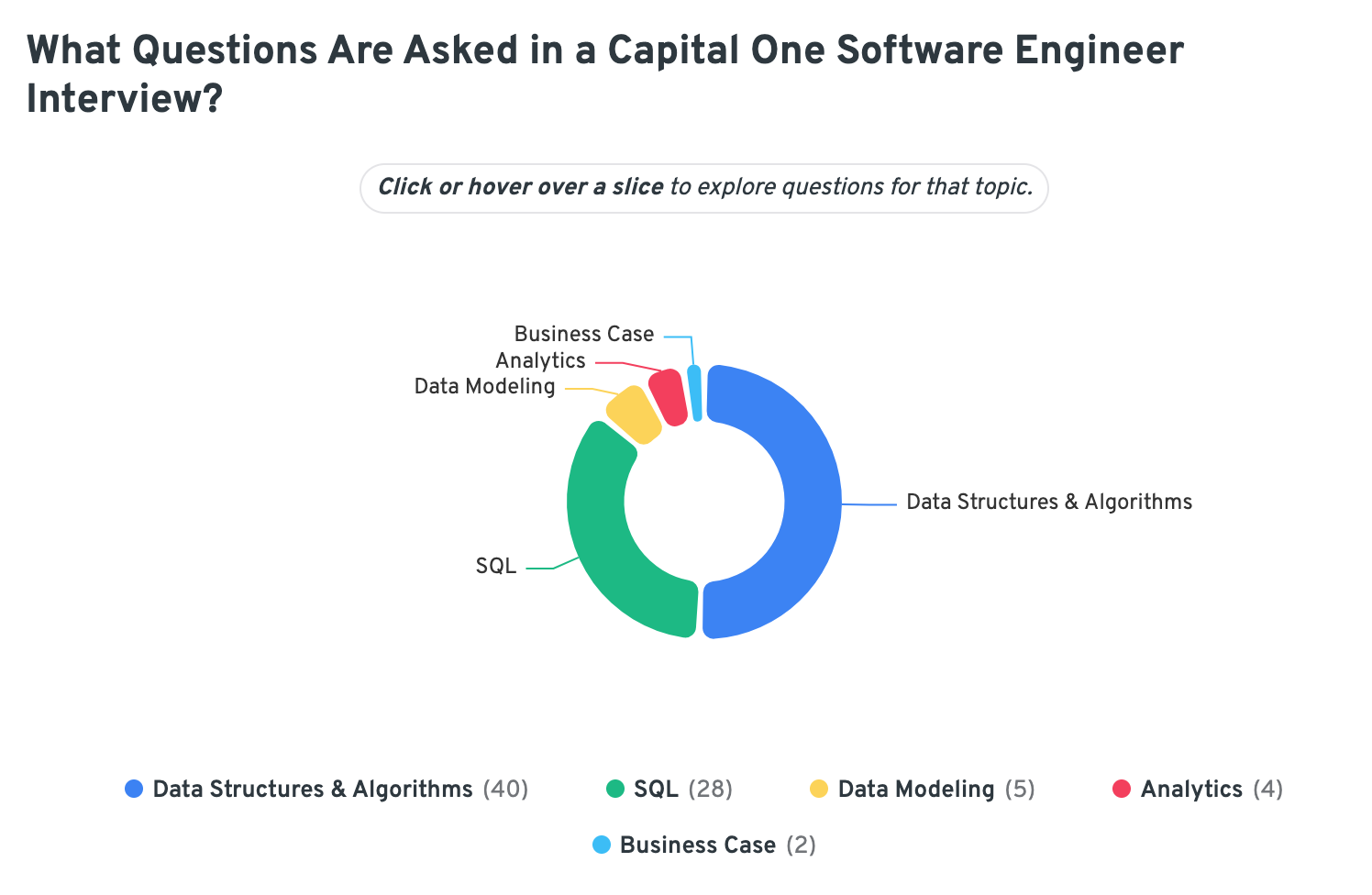
She paid attention to:
- Question types that appeared repeatedly
- How difficulty levels varied by role
- What companies actually prioritized in interviews
This helped her filter out low-value prep and focus on what was more likely to show up which also made her prioritize actively.
2. Preparing Specifically for Mid-Level Expectations
One of the biggest adjustments Anne made was aligning her preparation with the expectations of mid-level roles, not just technical difficulty, but how she was evaluated.
“Preparing really depends on the role and the seniority. Mid-level roles usually expect more explanation and reasoning,” she explains.
Using Interview Query, she started paying closer attention to how questions were framed for different levels. For the same topic, junior roles often focused on arriving at a correct answer, while mid-level roles required candidates to explain tradeoffs, justify decisions, and communicate clearly.
In practice, that meant changing how she approached problems:
- She spent less time memorizing solutions and more time re-solving medium-to-hard problems while narrating her thinking
- After solving a question, she would revisit it to ask: How would I explain this in an interview?
- She practiced connecting solutions back to real scenarios she had encountered in her work
This shift made her preparation feel closer to the actual interview experience.
3. Treating Communication as a Core Skill, Not an Add-On
Anne also realized that solving a problem correctly wasn’t enough, how she communicated her approach often determined how it was received.
To work on this, she paired Interview Query’s question bank with a more deliberate communication practice.
Instead of solving silently, she practiced:
- Talking through her approach from the start, even before coding
- Explaining why she chose one solution over another
- Calling out tradeoffs and edge cases as she worked
She also used company-specific guides to anticipate how interviews might flow: when to expect follow-up questions, when to go deeper into explanation, and how much emphasis to place on real-world context.
Over time, this changed how she showed up in interviews. She wasn’t just solving problems, she was guiding the interviewer through her thinking.
By combining company-specific insights with structured practice, Anne moved from a scattered preparation approach to one that was intentional, repeatable, and closely aligned with how interviews are actually conducted.
Inside the Interviews: What Changed
Anne’s preparation started to translate into stronger interview performance.
Her most advanced process was with Capital Technology Group, where she reached the final round. The interview process included:
- Recruiter screen
- HackerRank assessment
- Coding challenges
- Multiple-choice questions
- Final round
- Behavioral + technical interview
- Live coding session
“They asked about collaboration, teamwork, and then had me code while walking through my thought process,” Anne said.
The technical questions were closely aligned with her background, including detailed discussions around Vue composition APIs and state management.
What stood out most was how tailored the interview felt.
“They really base the questions on your experience and your resume.”
Because her preparation had shifted toward explanation, reasoning, and real-world context, she was better equipped to handle these deeper, experience-based questions.
To better understand what interviewers are really looking for in behavioral rounds, watch this breakdown:
This video highlights a key insight Anne discovered firsthand: behavioral interviews in tech about how you think, communicate, and connect your past work to real business impact. Going beyond describing what they did, strong candidates also explain why it mattered, how they made decisions, and what they learned.
What this changed
Reaching the final round didn’t just mark progress in the process, it marked a shift in how Anne approached interviews altogether. Even with factors like public trust clearance timelines extending the process, the outcome gave her something more valuable than a single result: confirmation that her preparation strategy was working.
She was no longer preparing in the dark. She understood what to focus on, how to approach different interviews, and how to position her experience effectively.
Why Interview Query Made the Difference
For Anne, the biggest shift wasn’t access to more questions, it was having a clear way to prioritize and structure her preparation.
Used company guides to decide what to focus on
Instead of solving random problems, Anne cross-referenced Interview Query’s company guides to identify which question types and formats appeared repeatedly across companies she was targeting, and prioritized those.
Filtered out low-value preparation
When certain problems or topics didn’t show up consistently across guides, she consciously deprioritized them, reducing time spent on low-probability questions.
Aligned preparation with mid-level expectations
She used role-based insights to shift from just solving problems to explaining decisions, walking through tradeoffs, and communicating clearly, skills expected in mid-level interviews.
Practiced in a way that mirrored real interviews
By combining company-specific guides with targeted questions, she structured her prep sessions around actual interview flows rather than isolated problem-solving.
Reduced guesswork in day-to-day prep
Each study session became more intentional, with a clear link between what she was practicing and how it would show up in interviews.
This shift turned her preparation from broad and reactive into focused, structured, and aligned with real interview expectations.
Advice for Software Engineering Candidates
Based on her experience, Anne recommends focusing less on volume and more on direction and relevance:
Start with company-specific context and customize
Understand how your target companies structure interviews before diving into practice, as this determines what you should prioritize.
Prioritize patterns over coverage
Focus on question types that show up repeatedly across companies instead of trying to cover every possible topic.
Prepare differently for different seniority levels
For mid-level roles, go beyond solving, practice explaining your thinking, tradeoffs, and real-world decision-making.
Treat communication as part of the solution
Practice speaking through your approach step-by-step, not just arriving at the correct answer.
Expect interviews to reflect your experience
Be ready to discuss your past work in depth, as many interviews are tailored to your resume and projects.
Reduce guesswork early in your prep
If your preparation feels scattered, step back and introduce structure, using tools like Interview Query to guide what you focus on.
Start Preparing With Interview Query
Anne’s experience highlights a common problem in technical interview prep: not a lack of effort, but a lack of direction.
With Interview Query, you can:
- Access company-specific interview guides
- Practice real technical interview questions
- Do mock interviews to learn how to communicate like a top candidate
- Prepare with confidence instead of guesswork
Whether you’re targeting companies like Cloudflare and Capital One or navigating mid-level roles, Interview Query helps you focus on what actually matters.