
6 Best AI Interviewer Platforms for Tech Interviews in 2026 (Ranked)


Introduction: The Rise of AI Interviewers
Beyond just reshaping roles, artificial intelligence is rapidly becoming part of the modern job search workflow. According to a recent study from Jobseeker, up to 40% of job seekers now use AI tools during their job search, not only to discover opportunities and refine applications but also to prepare for interviews.
For technical candidates, this shift is especially important. Traditional interview prep typically relies on a mix of practice questions, peer mock interviews, and mentorship. While helpful, the success of these methods in improving interview performance can be limited by scheduling, availability, and inconsistent feedback.
AI interviewer platforms fill this gap. Instead of rehearsing answers in isolation, candidates can run structured mock interviews on demand. These platforms simulate real interview environments by asking follow-up questions, evaluating responses, and providing feedback on areas like technical accuracy, communication, and problem-solving.
This kind of practice is particularly valuable for candidates preparing for roles such as:
- Data scientist
- Data analyst
- Software engineer
- Machine learning engineer
- Product manager
However, not all AI interview tools are equally effective, especially for technical interviews, where depth, realism, and role-specific feedback matter.
What This Guide Covers
In this guide, we rank the best AI interviewer platforms for tech interviews in 2026. Each platform is evaluated based on several factors that matter most to candidates preparing for real interviews, including realism, feedback quality, topic coverage, and role-specific preparation and adoption.
More importantly, this guide is informed not only by product research but also by real interview preparation experiences shared by Interview Query users. Many of the insights reflected here come from candidates who have reported what actually helped them improve during mock interviews and what failed to translate into real hiring processes.
By the end of this article, you’ll understand which AI interviewer platforms are most useful for your specific technical interview prep. You’ll also learn how to incorporate AI mock interviews into a broader preparation strategy that improves your performance in actual interviews.
How AI Interview Platforms Work
AI interview platforms simulate parts of the technical interview process using large language models and structured question frameworks. Rather than simply presenting practice questions, these tools attempt to recreate the dynamics of real interviews.
For instance, instead of showing a static prompt like “How would you design an A/B test?”, an AI interviewer might start with a product scenario such as:
“A product manager tells you that a new onboarding flow may improve user activation. How would you design an experiment to test this?”
As you answer, the AI can ask follow-up questions similar to what a real interviewer would ask, from your choice of primary success metric to your approach for determining the required sample size.
This back-and-forth interaction reflects how real interviews evolve. Interviewers rarely stop at the first answer; they probe deeper to evaluate your reasoning, assumptions, and communication.
AI interview platforms replicate this process through several core components, as outlined below.
1. Structured Interview Simulation
Instead of presenting isolated questions, AI interview platforms guide candidates through a flow that resembles an actual technical interview. This usually includes:
- opening problem statements
- clarification questions
- follow-up prompts
- timed response windows
For example, you might be given an analytic question such as: “A company notices that weekly active users dropped by 12% last month. How would you investigate the cause?” You might outline your approach, starting with checking recent product changes before segmenting users and analyzing engagement metrics.
The AI interviewer can then respond with prompts like: “What datasets would you look at first?” or “What would you do if you discovered the issue was isolated to new users?” This is similar to real interviews, in terms of interviewers pushing deeper to understand how you think through a problem, not just the final conclusion.
2. Answer Analysis and Evaluation
Rather than simply checking correctness, AI interview platforms analyze responses across several dimensions:
- technical accuracy
- reasoning clarity
- communication structure
- problem-solving approach
For example, if you’re explaining how to optimize a slow SQL query, it doesn’t end with finding a solution that works. Instead, the platform may flag issues in your response, like:
- skipping key assumptions about data size or indexing
- jumping to an advanced optimization before explaining the baseline query
- presenting the solution in a way that’s difficult to follow
Again, this aligns with how technical interviews are actually evaluated, since interviewers care more about how you structure your thinking and consider adjustments along the way than whether you instantly produce a correct answer.
3. Role-Specific Question Generation
Because interview formats vary by role, many platforms generate targeted questions such as:
- SQL analytics problems
- machine learning case discussions
- algorithm challenges
- product sense or system design prompts
This allows candidates to practice the specific interview formats used in their target roles.
4. Rapid Feedback and Iteration
AI interview platforms significantly accelerate the practice cycle. Instead of scheduling mock interviews, candidates can run multiple simulations in a single session and get instant feedback.
The strongest tools provide feedback that highlights:
- missing reasoning steps
- inefficient approaches
- gaps in technical explanations
By quickly identifying these weaknesses, candidates can refine answers quickly and test improvements in subsequent mock interviews.
What Makes a Good AI Interview Practice Platform?
Not all AI interview tools provide the same level of realism or usefulness. Some simply generate practice questions, while others simulate full interview experiences to truly improve performance.
In this ranking, platforms are evaluated based on five criteria that strongly impact interview preparation.
| Evaluation Criteria | Why It Matters | How It Is Evaluated |
|---|---|---|
| Interview Realism | Reflects real interview pressure and flow | Timers, structured prompts, follow-ups, interactive problem solving |
| Feedback Quality | Improves answers and guides iterations | Reasoning analysis, communication clarity, technical depth |
| Topic Coverage | Prepares candidates for varied interview formats | Coding, SQL, ML cases, system design, product sense, behavioral |
| Role-Specific Practice | Aligns preparation with target roles | Role-based question sets (DS, DA, SWE, MLE, PM) |
| Candidate Adoption | Indicates credibility and practical value | Candidate usage, community reputation, hiring relevance |
6 Best AI Interviewer Platforms for Tech Interviews (2026)
AI interview platforms vary widely in their focus. Some specialize in coding interviews, while others focus on data science or product management preparation.
The following platforms are ranked based on interview realism, feedback depth, and relevance to technical hiring processes.
| Platform | Best For | Interview Types | Feedback Quality |
|---|---|---|---|
| 1. Interview Query | Data science, analytics, AI/ML, product | SQL, analytics, ML | Instant, personalized feedback |
| 2. Final Round AI | General tech interviews | Technical + behavioral | Conversational AI analysis |
| 3. Interviewing.io | Software engineering | Coding, system design | Interview-style evaluation |
| 4. HackerRank | Coding practice | Algorithms, coding | Automated solution grading |
| 5. Exponent | Product managers | Product, system design, behavioral | Framework-based feedback |
| 6. Codecademy | Early-career developers | Coding practice | Guided feedback |
1. Interview Query
Best for Technical Interviews in Data, AI/ML, Analytics, and Product Roles
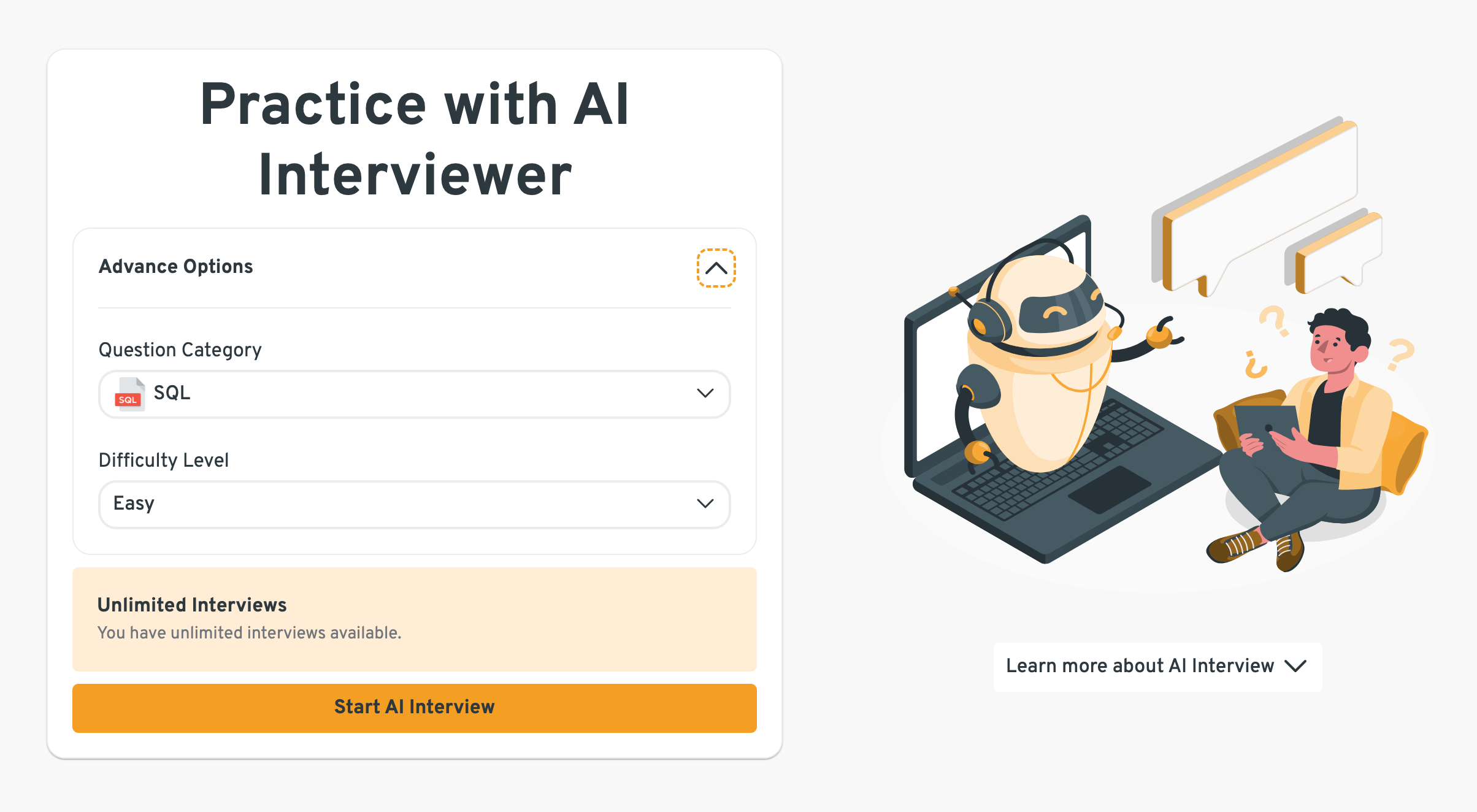
Interview Query offers AI Interviewer, an interactive mock interview platform designed to help candidates practice the types of technical interviews used for data science, analytics, AI/ML, and technical product roles.
Why It Ranks #1
Interview Query AI Interviewer ranks first because it focuses on how technical interviews actually evaluate candidates.
For roles in data, analytics, product, and engineering, interviews often emphasize:
- breaking down ambiguous problems
- designing experiments or metrics
- explaining assumptions and trade-offs
- communicating technical reasoning clearly
The platform’s simulations and feedback focus on these skills, helping candidates practice the analytical thinking and communication patterns that interviewers are evaluating in real hiring processes.
Another key advantage is that many of the scenarios are informed by real interview experiences shared by Interview Query users, which helps keep the practice sessions closely aligned with real-world technical interviews.
Key Features
1. Interactive AI Interview Simulations
The core feature of the platform is its ability to run structured, conversational mock interviews.
Instead of seeing a single question and writing an answer, candidates interact with an AI interviewer that continues probing their reasoning.
This back-and-forth helps replicate the dynamic questioning that happens in real technical interviews, where interviewers evaluate how candidates reason through problems, not just the final answer.
2. Built-In SQL, Python, and Technical Problem Practice
Many technical interviews require candidates to solve problems while explaining their approach, especially in data and AI roles.
The platform allows candidates to work through:
- SQL interview questions
- Python and analytical coding challenges
- machine learning or experimentation scenarios
- data structures and algorithms
During these sessions, candidates can write queries or code while the AI interviewer evaluates not just the solution, but also the corresponding assumptions, trade-offs, or alternative approaches.
This format helps candidates practice communicating technical reasoning while solving problems, which is a critical skill in real interviews.
3. Real-Time Feedback on Communication and Reasoning
One of the most difficult parts of interview preparation is figuring out whether your explanations actually make sense to another person.
Several Interview Query users have reported using the AI interviewer specifically to test how clearly they could explain their thinking aloud.
For example, one candidate who landed a data engineering role with the help of Interview Query reported using the AI interviewer to check whether their explanations sounded clear when spoken, helping them refine how they structured answers during interviews.
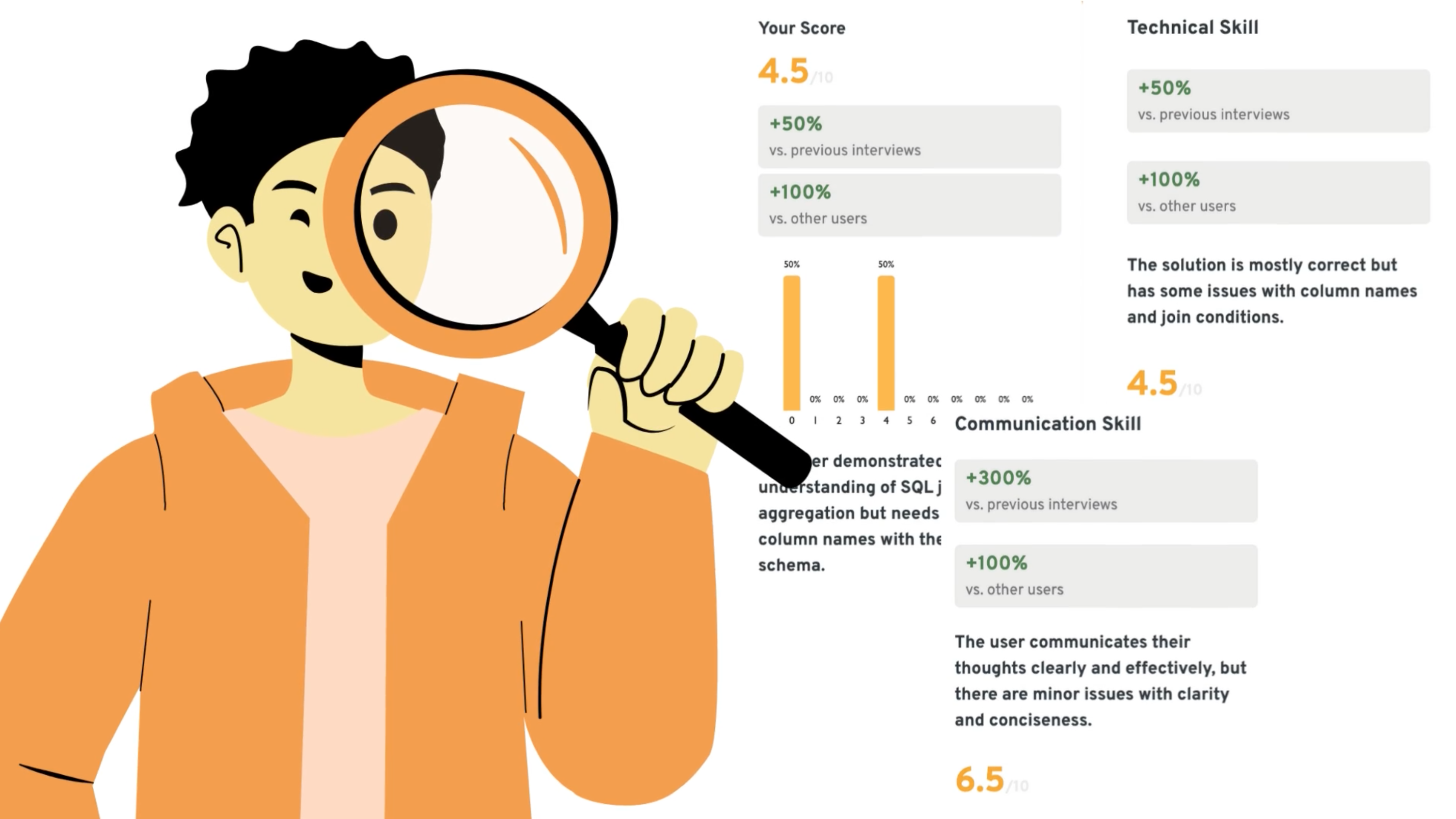
The platform analyzes responses and highlights areas such as unclear explanations, missing reasoning steps, weak assumptions or analytical gaps, and incomplete technical answers.
4. Rapid Feedback Loops to Identify Weak Spots
Another major benefit of the platform is how quickly candidates can identify and address weak areas.
One Interview Query user who landed an Amazon applied scientist role described using the AI interviewer alongside other study tools to simulate live questioning and quickly uncover gaps in his knowledge.
The AI interviewer would flag weak spots immediately, allowing him to revisit the underlying concepts and retry similar questions until he could both explain and apply the ideas confidently.
By combining structured AI practice with human accountability (such as study partners), he was able to close knowledge gaps much faster than with passive studying alone.
Limitations
- Less emphasis on algorithm-heavy coding interviews, which means candidates targeting companies with competitive programming-style interviews may need to supplement their preparation with dedicated coding practice platforms
2. Final Round AI
Best for General Tech Interviews
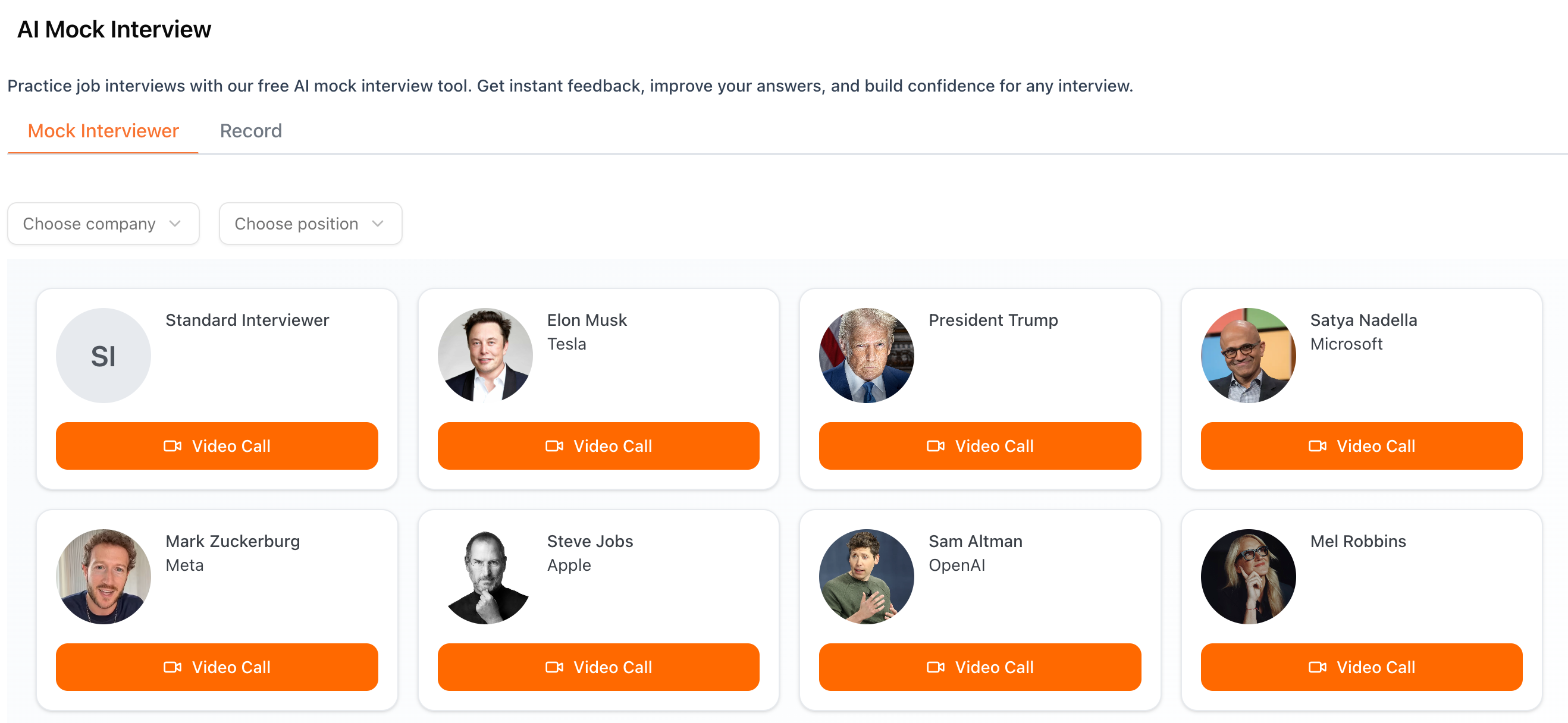
Final Round AI offers a conversational AI interviewer that simulates common interview questions across both technical and behavioral categories for roles like AI engineer and platform engineer.
The platform allows candidates to tailor interview questions based on their resume and target job description, answer in a conversational format, and receive feedback on their responses.
Interview Types
- Technical interview questions
- Behavioral interview simulations
- Structured interview practice sessions
Strengths
- Conversational interview experience
- Real-time response evaluation
- Broad role coverage
Limitations
- Technical depth varies depending on the question category
3. Interviewing.io AI Interview
Best for Software Engineering Practice
Interviewing.io is widely known for its anonymous live interviews with engineers from major tech companies.
Its AI interview functionality allows candidates to practice coding interviews before participating in live mock interviews with engineers. The tool also provides detailed feedback at the end of each session.
Interview Types
- Coding interview simulations
- System design challenges
Strengths
- Strong focus on software engineering interviews
- Interview formats aligned with common engineering interviews
Limitations
- Limited support for interview formats for other roles like data science or analytics
4. HackerRank Mock Interviews
Best Coding Environment Simulation
HackerRank provides coding environments that closely resemble the timed technical assessments used by many companies during hiring.
Candidates can practice algorithm challenges and coding questions using a platform similar to real online coding tests. In addition to getting instant feedback on their code, candidates can also chat with the virtual interviewer to follow up and clarify next steps.
Interview Types
- Coding challenges
- Algorithm problem solving
Strengths
- Realistic coding test environment
- Large library of programming challenges
Limitations
- Feedback focuses mainly on solution correctness rather than reasoning
5. Exponent AI Interview Practice
Best for Product and System Design Interviews
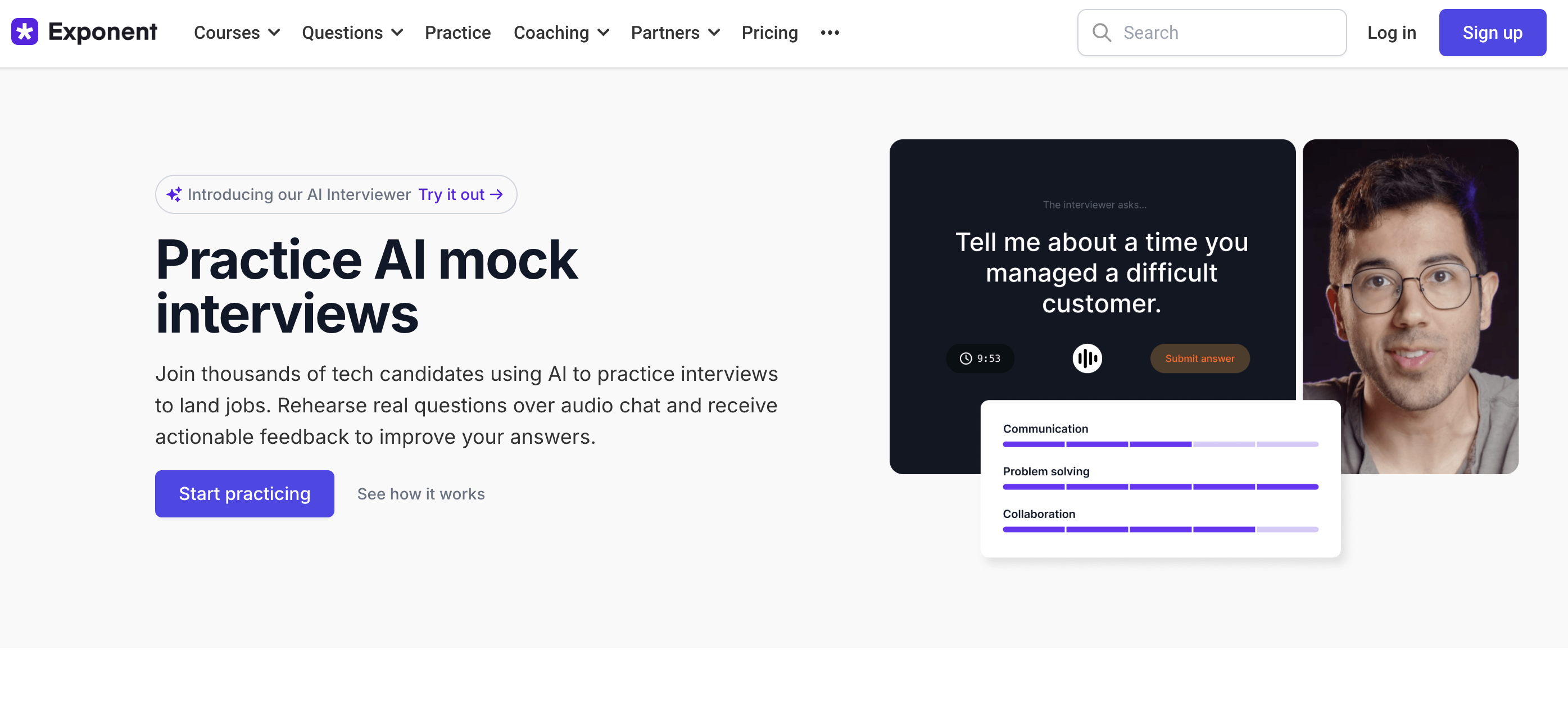
Exponent offers interview preparation tools focused on product management, system design, and behavioral interviews.
These interviews are often open-ended, requiring candidates to discuss product decisions, trade-offs, and frameworks. Feedback is immediate and based on industry-standard rubrics to provide candidates with a score across multiple skills like communication, problem-solving, and collaboration.
Interview Types
- Product sense interviews
- System design discussions
- Behavioral interview questions
Strengths
- Strong frameworks for answering open-ended interview questions
- Widely used by product manager candidates
Limitations
- Limited interview simulation for coding and data science
6. Codecademy Interview Simulator
Best for Early-Career Candidates
While Codecademy is widely known as a learning platform, it also provides an interview simulator integrated with its structured learning paths.
Using AI, it allows candidates to build their own interview scenarios, respond by speaking or typing, and get customized feedback on their answers.
Interview Types
- Coding interview questions
- Technical exercises about front-end, back-end, and full-stack development
Strengths
- Beginner-friendly interface
- Integrated with programming courses
Limitations
- Smaller interview question dataset compared to specialized platforms
Overall, AI interview platforms offer convenient practice through their interactive and personalized features, but they are only one part of effective interview preparation. Many candidates combine these tools with peer interviews and real coding practice.
AI Interviewers vs Human Mock Interviews
AI interview tools are powerful, but they don’t fully replace practicing with another person. In practice, AI interviewers and human mock interviews serve different purposes, and candidates often benefit most from combining both approaches.
AI platforms excel at high-frequency practice and rapid feedback loops. Because they are always available, candidates can run multiple mock interviews in a single study session, quickly identify weak spots, and immediately retry similar questions.
Human mock interviews, on the other hand, provide deeper conversational realism. Experienced interviewers can challenge assumptions, ask unexpected follow-up questions, and provide nuanced feedback on communication style, confidence, and storytelling, all of which are areas that may be harder for automated systems to evaluate fully.
Research on interview preparation also suggests that the two approaches complement each other well. Candidates often use AI interviews to build baseline fluency and repetition, then rely on human mock interviews to refine delivery and simulate the unpredictability of real interview conversations.
Read more: AI vs. Human Mock Interviews
| AI Interviewers | Human Mock Interviews |
|---|---|
| Unlimited practice sessions on demand | More realistic conversational dynamics |
| Instant feedback and fast iteration cycles | Deeper follow-up questions and contextual feedback |
| Consistent evaluation across multiple sessions | Personalized coaching and mentorship |
| Efficient way to identify weak knowledge areas | Opportunity to practice rapport and communication |
Platforms like Interview Query AI Interviewer allow candidates to combine both methods. Candidates can practice frequently with the AI interviewer for structured repetition, then transition to live mock interviews with peers or experts to refine delivery and interview presence.
This hybrid approach often produces the strongest results: AI practice builds consistency, while human interviews build realism.
When Should You Use an AI Interview Platform?
AI interview platforms are most effective when used throughout different stages of interview preparation, not just right before interviews. Candidates typically use them to build familiarity with interview formats, identify weak spots, and rehearse under realistic conditions.
The table below outlines how AI interview tools fit into each stage of preparation and what candidates typically gain from using them.
| Preparation Stage | How Candidates Use AI Interview Platforms | Why It Helps |
|---|---|---|
| Early Preparation | • Run short mock interviews for familiarity with common questions • Practice explaining answers aloud • Follow AI prompts to guide structured responses |
• Learn how to approach open-ended technical questions • Build confidence speaking through solutions step by step • Turn passive studying into active explanation practice |
| Mid-Stage Preparation | • Run repeated interview simulations across different topics • Review AI feedback to identify recurring weak spots • Retry similar questions to enhance explanations and technical reasoning |
• Diagnose knowledge gaps and reasoning mistakes, such as missing edge cases, weak assumptions, or incomplete explanations • Conduct rapid practice and iteration without scheduling mock interviews |
| Final Interview Rehearsal | • Run full-length or timed interview simulations • Practice thinking aloud under time constraints • Refine response structure and communication clarity |
• Simulate the pacing and pressure of real interviews • Improve time management and structured responses • Build confidence before actual interview rounds |
How to Get the Most Value From AI Mock Interviews
To maximize the value of AI interview platforms, candidates should approach mock interviews as seriously as real interviews.
Treat each session like a real interview
Practice explaining your reasoning clearly rather than rushing to the answer.
Review feedback carefully
Strong candidates analyze feedback and identify patterns in mistakes or weak explanations.
Focus on communication
Technical interviews often evaluate how well candidates explain ideas. Practicing structured explanations can significantly improve performance.
Combine AI interviews with real practice
Coding practice, system design exercises, and case study preparation should complement AI mock interviews.
FAQs
Are AI interview platforms actually helpful for technical interview preparation?
Yes. AI interview platforms are most useful for practicing structured problem solving and improving communication during technical explanations. They allow candidates to rehearse answering questions under time pressure and receive feedback on reasoning, which mirrors how many technical interviews are evaluated.
Can AI interview tools replace real mock interviews with humans?
AI tools are best used as a complement to human mock interviews rather than a replacement. They provide fast repetition and instant feedback, while human interviewers are better at evaluating nuanced communication, collaboration, and real-world problem solving.
What roles benefit most from AI interview platforms?
AI interview platforms are commonly used by candidates preparing for roles such as software engineering, data science, data analytics, machine learning engineering, and product management. These roles involve structured interviews where practicing explanations and problem solving is especially valuable.
How often should candidates practice with AI interview tools?
Many candidates benefit from running several short interview simulations per week during active interview preparation. Frequent practice helps build familiarity with common question formats and improves the ability to explain technical reasoning clearly.
What should candidates look for when choosing an AI interview platform?
The most effective platforms provide structured interview simulations, detailed feedback on reasoning and communication, role-specific question coverage, and practice formats that resemble real technical interviews. Tools with strong adoption among tech candidates tend to evolve faster and reflect current hiring practices.
Level Up Your Prep with Interview Query
AI interview platforms are quickly becoming a standard tool for technical interview preparation. They allow candidates to simulate interviews, receive structured feedback, and practice repeatedly without scheduling constraints.
However, different platforms serve different purposes. Coding platforms emphasize algorithms and technical challenges, while others focus on analytics cases or product discussions.
Choosing the right platform depends on the type of role you are targeting.
For candidates preparing for interviews for data science, analytics, AI/ML, and product roles, specialized platforms like Interview Query provide the most targeted preparation by focusing on analytical reasoning, SQL, and real-world data interview scenarios. Try our AI Interviewer now →