Irobot is a leading innovator in home robotics, committed to enhancing everyday life through advanced technology and consumer-centric design.
As a Software Engineer, you will play a pivotal role in developing cutting-edge robotic software applications that power the next generation of home robots. Your responsibilities will encompass the design, implementation, and delivery of software solutions in complex environments, primarily using C++. You will be tasked with solving intricate problems with elegant and straightforward solutions, while also contributing to the engineering community through mentorship and knowledge sharing. A strong foundation in multi-threaded applications, design patterns, and data structures is essential, along with proficiency in Linux environments and real-time systems debugging. Your passion for robotics and experience in consumer electronics will further strengthen your fit for this role.
This guide will prepare you to showcase your technical expertise and problem-solving abilities effectively, while also aligning your aspirations with Irobot’s mission to innovate and enhance user experience in home automation.
Average Base Salary
Average Total Compensation
The interview process for a Software Engineer at iRobot is designed to assess both technical skills and problem-solving abilities, particularly in the context of robotics and consumer products. The process typically unfolds as follows:
The initial screening is a brief phone interview with a recruiter, lasting about 30 minutes. During this conversation, the recruiter will discuss your background, motivations for applying to iRobot, and your understanding of the role. This is also an opportunity for you to ask questions about the company culture and the team dynamics.
Following the initial screening, candidates typically undergo a series of technical interviews, often totaling around five rounds. These interviews focus heavily on your proficiency in C++ and your understanding of object-oriented programming (OOP) principles. You may be presented with complex problems related to robotics and asked to devise solutions on the spot. Expect to encounter questions that assess your ability to work with multi-threaded applications, design patterns, and data structures.
In addition to technical skills, candidates will be evaluated on their problem-solving capabilities. This may involve discussing real-world scenarios where you need to apply your knowledge of algorithms and software design to address challenges in robotic applications. You might also be asked to solve LeetCode-style coding problems that test your analytical thinking and coding proficiency.
A behavioral interview is also part of the process, where you will be asked about your past experiences, teamwork, and how you handle challenges. This is an opportunity to showcase your passion for robotics and your ability to mentor others, as well as your experience in Agile environments and cross-functional teams.
The final interview may involve meeting with senior engineers or team leads. This round often focuses on your fit within the team and your alignment with iRobot's mission and values. You may discuss your experiences in delivering consumer electronics and your familiarity with tools and technologies relevant to the role, such as AWS, Test Driven Development, and various communication protocols.
As you prepare for the interview process, consider the specific skills and experiences that will be most relevant to the questions you will encounter.
Here are some tips to help you excel in your interview.
Before your interview, take the time to familiarize yourself with iRobot's mission and values, particularly their focus on consumer-centric innovation. Understanding how your role as a Software Engineer contributes to the development of robotic products will help you articulate your passion for the position. Be prepared to discuss how your personal values align with the company's commitment to creating technology that enhances everyday life.
Given the emphasis on C++ in the interview process, ensure you have a solid grasp of the language, particularly in the context of multi-threaded applications and design patterns. Practice coding problems that require you to think critically and solve complex issues on the spot. Familiarize yourself with common algorithms and data structures, as these are likely to come up during technical interviews.
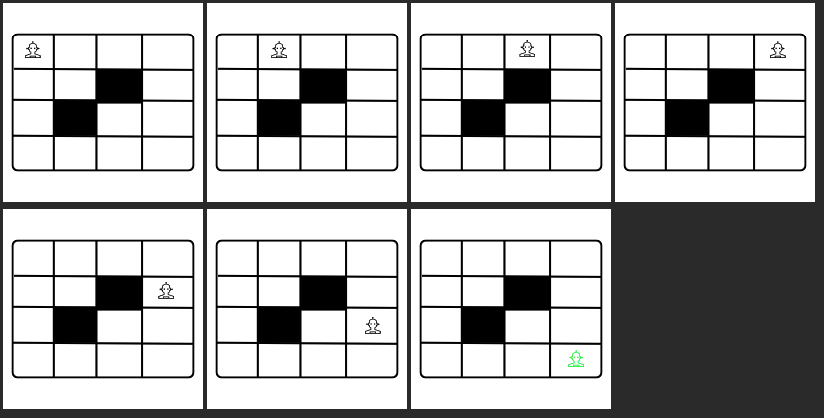
Expect to encounter questions that require you to apply your knowledge to real-world problems, particularly those related to robotics. Be ready to discuss how you would approach challenges such as determining a robot's location within a room or optimizing software for performance in a consumer product. Use examples from your past experiences to illustrate your problem-solving process and your ability to deliver simple solutions to complex problems.
iRobot values teamwork and knowledge sharing, so be prepared to discuss your experiences working in cross-functional teams and mentoring others. Highlight any instances where you contributed to a collaborative environment or helped educate peers on best practices and emerging technologies. This will demonstrate your ability to thrive in a team-oriented culture and your commitment to continuous learning.
Your enthusiasm for robotics can set you apart from other candidates. Share any personal projects or experiences that reflect your interest in the field, whether through professional work or hobbies. Discuss how these experiences have shaped your understanding of robotic systems and your desire to contribute to innovative solutions at iRobot.
In addition to technical skills, be prepared for behavioral questions that assess your fit within the company culture. Reflect on past experiences where you faced challenges, made decisions under pressure, or collaborated with others. Use the STAR (Situation, Task, Action, Result) method to structure your responses, ensuring you convey your thought process and the impact of your actions.
By following these tips and preparing thoroughly, you'll be well-equipped to make a strong impression during your interview at iRobot. Good luck!
In this section, we’ll review the various interview questions that might be asked during an interview for a Software Engineer position at iRobot. The interview process will focus on your technical skills, particularly in C++, as well as your problem-solving abilities and understanding of robotics. Be prepared to discuss your experience with multi-threaded applications, design patterns, and real-time systems.
Understanding multi-threading is crucial for developing efficient robotic applications that can perform multiple tasks simultaneously.
Discuss the benefits of multi-threading in terms of performance and responsiveness, especially in real-time systems. Provide examples of how you have implemented multi-threading in past projects.
“Multi-threading allows a robot to perform tasks concurrently, such as processing sensor data while executing navigation algorithms. In a previous project, I implemented a multi-threaded architecture that enabled real-time data processing from multiple sensors, significantly improving the robot's responsiveness to environmental changes.”
This question assesses your problem-solving skills and ability to handle ambiguity.
Outline the problem, your thought process, and the steps you took to arrive at a solution. Emphasize your analytical skills and creativity in finding solutions.
“In a project involving autonomous navigation, we faced challenges with obstacle detection. I analyzed the sensor data and identified that our algorithms were not accurately interpreting the data. I proposed a new approach using machine learning techniques to improve the accuracy of obstacle recognition, which ultimately enhanced the robot's navigation capabilities.”
Design patterns are essential for creating scalable and maintainable software.
Mention specific design patterns you have used, such as Singleton, Observer, or Factory, and explain how they helped solve particular problems in your projects.
“I frequently use the Observer pattern in robotic applications to manage communication between different components. For instance, in a robot's control system, I implemented the Observer pattern to allow the sensor module to notify the navigation module of any changes in the environment, ensuring timely updates and actions.”
Debugging is critical in ensuring the reliability of robotic systems.
Discuss your debugging strategies, tools you use, and how you prioritize issues in real-time systems.
“When debugging real-time systems, I prioritize issues based on their impact on performance. I use tools like GDB for step-by-step debugging and employ logging to capture system states. In one instance, I identified a timing issue in a control loop that was causing erratic behavior, and I resolved it by optimizing the timing of sensor data processing.”
Control theory is fundamental in designing systems that behave predictably.
Discuss the principles of control theory and how they apply to robotic systems, particularly in maintaining stability and performance.
“Control theory is essential in robotics for designing systems that can maintain desired states despite disturbances. For example, I applied PID control in a robot's movement system to ensure smooth and accurate navigation, adjusting the parameters based on real-time feedback from the sensors.”
C++ is a primary language for many robotic systems, and familiarity with it is crucial.
Highlight your experience with C++, focusing on specific projects and the features of the language you utilized.
“I have extensive experience with C++ in developing robotic applications, particularly in implementing algorithms for path planning and sensor integration. In one project, I used C++ to optimize the performance of a navigation algorithm, reducing processing time by 30%.”
Code quality is vital for long-term project success.
Discuss your practices for writing clean, maintainable code, including code reviews, testing, and documentation.
“I ensure code quality by adhering to coding standards and conducting regular code reviews with my team. I also implement unit tests and use tools like Google Test to automate testing, which helps catch issues early and maintain high code quality throughout the development process.”
Linux is often the operating system of choice for robotics applications.
Share your familiarity with Linux, including any specific tools or environments you have used.
“I have developed software in Linux environments for several years, utilizing tools like GCC for compilation and GDB for debugging. I also have experience with shell scripting to automate build processes and manage system configurations.”
Configuration management is essential for maintaining system integrity.
Discuss your experience with configuration management tools and strategies, particularly in hardware contexts.
“I use version control systems like Git for managing code changes and configurations. In a hardware context, I implemented a configuration management system that allowed us to track changes in firmware and software, ensuring that all components were compatible and up-to-date.”
Agile methodologies are common in software development.
Explain your experience with Agile practices and how you collaborate with cross-functional teams.
“I thrive in Agile environments, where I actively participate in daily stand-ups and sprint planning. In a recent project, I collaborated closely with UI/UX designers and product managers to ensure that our robotic application met user needs while adhering to technical constraints, resulting in a successful product launch.”