
Baidu Software Engineer Interview Questions + Guide in 2025


Overview
Baidu is a global leader in artificial intelligence research, dedicated to pioneering advancements that shape the AI landscape through innovative projects and a strong emphasis on teamwork.
As a Software Engineer at Baidu, you will be responsible for designing and developing complex, highly scalable, and latency-optimized software solutions. This role emphasizes the need for strong expertise in algorithms, particularly in the context of machine learning and data analysis. You will collaborate with cross-functional teams to implement, optimize, and test algorithms on Baidu's platforms, contributing directly to the development of cutting-edge AI products. Key responsibilities include maintaining documentation of the development process, mentoring junior developers, and participating in discussions about current AI trends and techniques.
Ideal candidates will possess a master's degree or Ph.D. in Computer Science or a related field, with proven experience in software development methodologies and best practices. Proficiency in programming languages such as Python and C++, along with a solid understanding of algorithms and data structures, will set you apart. Baidu values self-directed individuals with a hunger for learning and a strong team orientation, making adaptability and collaboration essential traits for success.
This guide will help you prepare for your interview by equipping you with insights into the role's expectations and the skills that will be assessed during the process.
What Baidu Looks for in a Software Engineer
Challenge
Check your skills...
How prepared are you for working as a Software Engineer at Baidu?
Baidu Software Engineer Interview Process
The interview process for a Software Engineer position at Baidu is structured to assess both technical skills and cultural fit within the organization. It typically consists of several rounds, each designed to evaluate different aspects of a candidate's qualifications and compatibility with Baidu's innovative environment.
1. Initial Screening
The process begins with an initial screening, which is often conducted via a phone call with a recruiter. This conversation usually lasts about 30 minutes and focuses on your resume, professional background, and motivation for applying to Baidu. The recruiter will also gauge your understanding of the company and its products, as well as your alignment with Baidu's mission and culture.
2. Technical Interviews
Following the initial screening, candidates typically undergo two to three technical interviews. These interviews can be conducted over video conferencing platforms and focus on assessing your coding skills, problem-solving abilities, and understanding of algorithms and data structures. Expect to solve coding problems in real-time, which may include questions related to linked lists, sorting algorithms, and system design. You may also be asked to explain your thought process and approach to solving these problems.
3. Behavioral Interview
In addition to technical assessments, candidates will participate in a behavioral interview. This round aims to evaluate your soft skills, teamwork, and how you handle challenges. Questions may revolve around past experiences, conflict resolution, and your ability to work in a fast-paced, collaborative environment. Be prepared to discuss specific examples that demonstrate your problem-solving skills and adaptability.
4. Final Interview
The final stage of the interview process often involves a conversation with a hiring manager or team lead. This interview may cover both technical and behavioral aspects, focusing on your fit within the team and your understanding of Baidu's products and technologies. You may also be asked about your career aspirations and how you envision contributing to the company's goals.
5. Offer Discussion
If you successfully pass all previous rounds, you will enter the offer discussion phase. This is where the recruiter will discuss the details of the job offer, including salary, benefits, and any other relevant information.
As you prepare for your interviews, it's essential to familiarize yourself with the types of questions that may be asked during the process.
Baidu Software Engineer Interview Tips
Here are some tips to help you excel in your interview.
Prepare for Technical Questions
Given the emphasis on algorithms and data structures in the interview process, it's crucial to brush up on your knowledge in these areas. Focus on common algorithmic problems, particularly those related to linked lists, sorting, and searching. Practice coding problems on platforms like LeetCode or HackerRank, especially those that involve finding top elements in large datasets or manipulating strings and arrays. Be ready to explain your thought process clearly and concisely, as interviewers appreciate candidates who can articulate their reasoning.
Understand Machine Learning Fundamentals
Since the role may involve machine learning concepts, ensure you have a solid grasp of basic ML principles, including model training, evaluation metrics, and common algorithms. Be prepared to discuss your experience with machine learning projects, particularly any that relate to large datasets or real-time processing. Familiarize yourself with the latest trends in AI and how they might apply to Baidu's products, especially in the context of Large Language Models.
Showcase Your Problem-Solving Skills
During the interview, you may encounter open-ended questions that assess your problem-solving abilities. Approach these questions methodically: clarify the problem, outline your thought process, and discuss potential solutions. For example, if asked how to find the top 10 numbers from a large database, explain your approach to optimizing the search and the algorithms you would use. This demonstrates not only your technical skills but also your analytical thinking.
Emphasize Team Collaboration
Baidu values team orientation and collaboration. Be prepared to discuss your experiences working in teams, particularly in fast-paced environments. Highlight instances where you contributed to team goals, resolved conflicts, or mentored junior colleagues. This will show that you align with the company culture and can thrive in their collaborative setting.
Communicate Effectively
Strong communication skills are essential, especially since the role requires collaboration with cross-functional teams. Practice articulating your thoughts clearly and confidently. Be ready to discuss your past projects and how they relate to the position you are applying for. Additionally, since fluency in Mandarin is preferred, ensure you can communicate effectively in both English and Mandarin if applicable.
Align with Company Culture
Baidu seeks candidates who are self-directed, eager to learn, and mission-oriented. Reflect on your personal values and experiences that align with these traits. Be prepared to discuss how you can contribute to Baidu's mission and your enthusiasm for continuous learning and growth within the company.
Prepare for Behavioral Questions
Expect behavioral questions that explore your past experiences and how they relate to the role. Use the STAR (Situation, Task, Action, Result) method to structure your responses. This will help you provide clear and concise answers that demonstrate your qualifications and fit for the role.
By following these tips and preparing thoroughly, you'll position yourself as a strong candidate for the Software Engineer role at Baidu. Good luck!
Baidu Software Engineer Interview Questions
In this section, we’ll review the various interview questions that might be asked during a Software Engineer interview at Baidu. The interview process will likely focus on your technical skills, particularly in algorithms, programming languages, and system design, as well as your ability to work collaboratively in a team-oriented environment.
Algorithms and Data Structures
1. How would you find the top 10 numbers from a database of 10 million records?
This question tests your understanding of efficient algorithms and data handling.
How to Answer
Discuss the algorithm you would use, such as a min-heap or quickselect, and explain how it optimizes performance for large datasets.
Example
"I would use a min-heap to keep track of the top 10 numbers. As I iterate through the database, I would insert each number into the heap. If the heap exceeds 10 elements, I would remove the smallest element. This ensures that at the end of the iteration, the heap contains the top 10 numbers."
2. Can you explain the longest palindromic substring problem and how you would solve it?
This question assesses your knowledge of string manipulation and dynamic programming.
How to Answer
Outline the approach you would take, such as expanding around potential centers or using dynamic programming.
Example
"I would use the expand-around-center technique, where I check for palindromes by expanding from the center of each character and between each pair of characters. This gives a time complexity of O(n^2), which is efficient for this problem."
3. Describe how you would implement a breadth-first search (BFS) algorithm.
This question evaluates your understanding of graph traversal techniques.
How to Answer
Explain the BFS algorithm, including the data structures used, and provide a brief example.
Example
"BFS can be implemented using a queue. Starting from the root node, I would enqueue it and then repeatedly dequeue a node, visiting its neighbors and enqueuing them until all nodes are visited."
4. How would you design an algorithm to substitute all occurrences of 'a' with 'b' in a file of size 3.5GB?
This question tests your ability to handle large data efficiently.
How to Answer
Discuss the approach you would take, such as reading the file in chunks to avoid memory issues.
Example
"I would read the file in manageable chunks, process each chunk to replace 'a' with 'b', and then write the modified chunk to a new file. This way, I can handle large files without running out of memory."
5. What is the time complexity of your favorite sorting algorithm, and can you implement it?
This question assesses your knowledge of sorting algorithms and their efficiencies.
How to Answer
Choose a sorting algorithm, explain its time complexity, and provide a brief implementation.
Example
"I prefer quicksort, which has an average time complexity of O(n log n). I would implement it using a recursive function that partitions the array around a pivot."
Programming Languages
1. What are the key features of object-oriented programming?
This question evaluates your understanding of programming paradigms.
How to Answer
Discuss the four main principles: encapsulation, inheritance, polymorphism, and abstraction.
Example
"Object-oriented programming is characterized by encapsulation, which hides the internal state of objects; inheritance, which allows classes to inherit properties from other classes; polymorphism, which enables methods to do different things based on the object; and abstraction, which simplifies complex systems by modeling classes based on essential properties."
2. Can you explain the difference between Python lists and tuples?
This question tests your knowledge of data structures in Python.
How to Answer
Highlight the key differences, such as mutability and performance.
Example
"Lists are mutable, meaning they can be changed after creation, while tuples are immutable. This makes tuples faster and more memory-efficient, which is beneficial when you need a constant set of values."
3. How do you handle exceptions in your code?
This question assesses your understanding of error handling.
How to Answer
Explain the try-except block and how you would use it to manage exceptions.
Example
"I use try-except blocks to catch exceptions and handle them gracefully. For example, I would wrap file operations in a try block and catch IOError to manage file-related errors."
4. What is your experience with SQL, and can you write a query to find duplicates in a table?
This question evaluates your database skills.
How to Answer
Discuss your experience with SQL and provide a sample query.
Example
"I have experience writing complex SQL queries. To find duplicates, I would use a query like: SELECT column_name, COUNT(*) FROM table_name GROUP BY column_name HAVING COUNT(*) > 1;"
5. Describe a project where you used Python for data analysis.
This question assesses your practical experience with Python.
How to Answer
Discuss the project, the libraries you used, and the outcomes.
Example
"I worked on a project analyzing sales data using Pandas and Matplotlib. I cleaned the data, performed exploratory analysis, and visualized trends, which helped the team make informed decisions about inventory management."
System Design
1. How would you design a system like Hadoop?
This question tests your understanding of distributed systems.
How to Answer
Outline the components of Hadoop, such as HDFS and MapReduce, and discuss scalability.
Example
"I would design Hadoop with HDFS for distributed storage and MapReduce for processing. The system would be scalable, allowing nodes to be added easily, and I would ensure fault tolerance by replicating data across multiple nodes."
2. What considerations would you take into account when designing a cloud-native application?
This question evaluates your knowledge of cloud architecture.
How to Answer
Discuss aspects like scalability, microservices, and containerization.
Example
"I would focus on scalability by using microservices architecture, ensuring each service can scale independently. I would also use Docker for containerization to simplify deployment and management."
3. Can you explain the CAP theorem and its implications for distributed systems?
This question assesses your understanding of distributed system principles.
How to Answer
Discuss the trade-offs between consistency, availability, and partition tolerance.
Example
"The CAP theorem states that in a distributed system, you can only guarantee two of the three properties: consistency, availability, and partition tolerance. This means that during a network partition, I must choose between maintaining consistency or availability."
4. How would you implement a load balancer for a web application?
This question tests your knowledge of web architecture.
How to Answer
Discuss the types of load balancers and how they distribute traffic.
Example
"I would implement a round-robin load balancer to distribute incoming requests evenly across multiple servers. I would also consider using health checks to ensure traffic is only sent to healthy instances."
5. Describe how you would ensure high availability in a system.
This question evaluates your understanding of system reliability.
How to Answer
Discuss strategies like redundancy, failover mechanisms, and monitoring.
Example
"I would ensure high availability by implementing redundancy through multiple instances and using a failover mechanism to switch to a backup system in case of failure. Additionally, I would set up monitoring to detect issues proactively."
| Question | Topic | Difficulty |
|---|---|---|
Data Structures & Algorithms | Medium | |
Binary Tree ValidationYou are given the root of a binary tree. You need to determine if it is a valid binary search tree (BST). A valid BST is defined as follows:
Given the function Example:Input:
Output: | ||
SQL | Easy | |
SQL | Medium | |
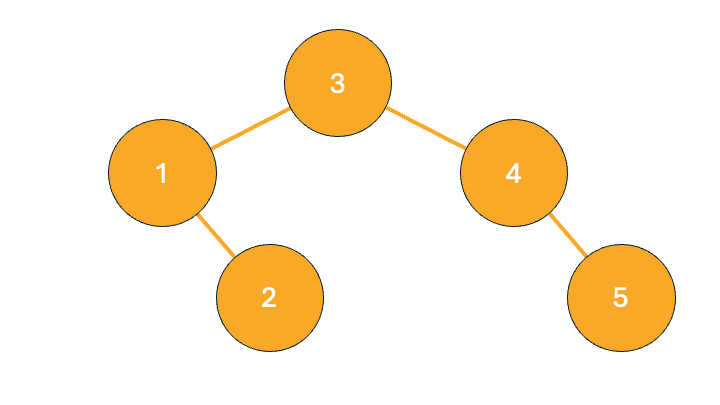 Converted Binary Tree.png
SQL | Easy | |
Machine Learning | Medium | |
Statistics | Medium | |
SQL | Hard | |
Machine Learning | Medium | |
Python | Easy | |
Deep Learning | Hard | |
SQL | Medium | |
Statistics | Easy | |
Machine Learning | Hard |
Discussion & Interview Experiences